

You finally found the perfect pillow—one that cradles your head with the breathable, cloud-like comfort only natural fill can provide. Then morning comes, and you notice the fill has shifted overnight, or a suspicious flat spot has formed where your head rested. Natural-fill pillows, whether down or feather, are an investment in sleep quality, but they demand a different maintenance approach than their synthetic counterparts. Many owners accidentally ruin their pillows by washing them too aggressively, drying them improperly, or skipping routine fluffing altogether. If you’re searching for quality goose down pillows in CA, you’ll want to know exactly how to protect that investment once it arrives at your door.
Quick Answer
To care for natural-fill pillows without damaging them, wash them sparingly—only every 6 to 12 months—using a front-loading washer with mild detergent on a gentle cycle with cold or warm water. Dry them on low heat with clean tennis balls or dryer balls to break up clumps, and continue drying until completely moisture-free, which often takes 2 to 3 hours. Between washes, fluff pillows daily, air them out weekly, and use a protective pillow protector to absorb oils and sweat. Never dry-clean down pillows, never use fabric softeners, and never machine-dry on high heat, as these will destroy the natural oils and loft of the fill.
Key Takeaways
- Wash natural-fill pillows only once or twice per year; over-washing strips essential natural oils from the fill.
- Always use a front-loading washer without an agitator to prevent tearing or distorting the pillow’s internal structure.
- Drying is the most critical step—use low heat, add dryer balls or clean tennis balls, and ensure the fill is 100% dry to prevent mold and mildew.
- Daily fluffing and weekly airing between washes dramatically extend pillow lifespan and maintain loft.
- Invest in a quality pillow protector to shield the fill from body oils, sweat, and dust mites, reducing the frequency of deep cleaning.
Why Natural-Fill Pillows Need Special Care
Down and feather fills come from the soft undercoating or outer plumage of geese and ducks. These natural materials contain proteins and natural oils that create resilience, loft, and moisture-wicking properties. Unlike polyester fill, which is synthetic and nearly indestructible, natural fill is biologically sensitive. Harsh detergents strip the natural oils, high heat denatures the protein structure, and aggressive agitation breaks the delicate clusters that create loft. Understanding this fundamental difference explains why every care decision matters.
Another critical distinction: down clusters trap air to create insulation and cushioning, while feathers provide structure and support. A pillow labeled “down” should contain primarily down clusters, whereas “feather” pillows contain more quilled feathers. Both types require similar care, but feather pillows tend to have a stronger odor when wet and may require extra drying time. Recognizing what’s inside your pillow helps you adjust your care routine appropriately.
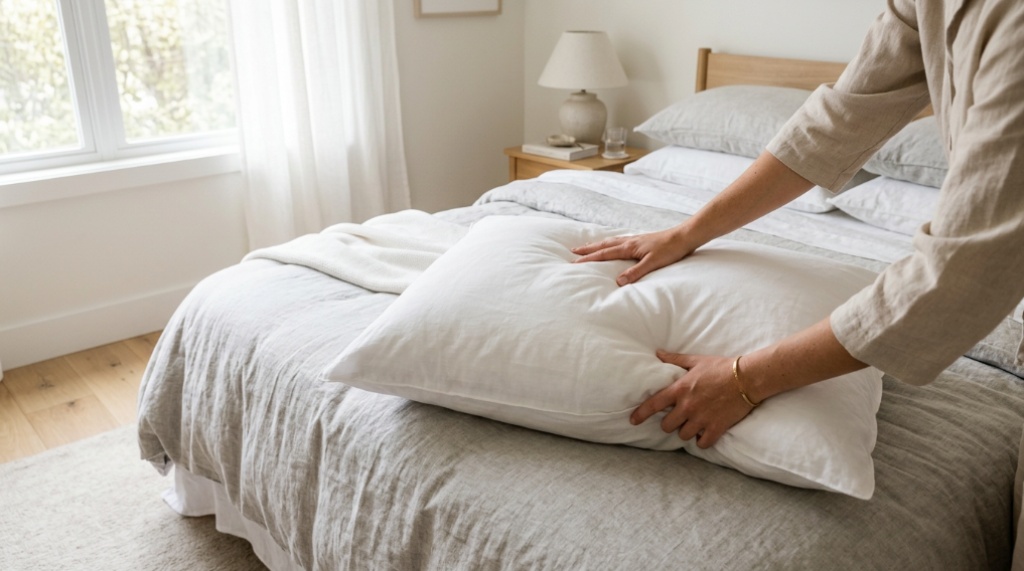
Daily and Weekly Maintenance Between Washes
Most pillow damage occurs not during washing but during the months between washes. Daily and weekly habits determine whether your pillow maintains its shape or gradually flattens into a sad, lumpy pancake.
Daily Fluffing
When you wake up, your pillow has been compressed under your head for hours. The down clusters have flattened, and moisture from sweat has settled into the fill. Spend 15 to 30 seconds each morning fluffing the pillow by pulling it from opposite corners and shaking it gently. This redistributes the fill and allows air to circulate through the clusters. Squeezing the pillow firmly in a ball, rather than pulling it, actually compresses the fill further and encourages clumping.
Weekly Airing
Once a week, place your pillow in a well-ventilated area away from direct sunlight for a few hours. Sunlight can degrade natural fibers over time, but indirect fresh air helps evaporate trapped moisture and neutralizes odors. If you have an outdoor space, draping the pillow over a clean, dry railing works well—just avoid leaving it outside overnight when humidity and dew can soak the fill. Indoor airing near an open window is equally effective during colder months.
Rotation Strategy
If you sleep on your side, your pillow compresses in the same spot every night. Rotating the pillow end-to-end weekly, and flipping it over, distributes wear more evenly. This simple habit prevents the development of permanent indentations and extends the time between deep cleanings.
When to Wash and When to Avoid Washing
Knowing when not to wash is just as important as knowing how. Washing natural fill too frequently is the fastest way to ruin it. Each wash cycle removes some natural oils and causes mechanical stress on the delicate clusters, To discover more about alternative sleep options, check out our guide on how to find adjustable buckwheat pillows in California.
Signs Your Pillow Needs Washing
Follow these indicators rather than a rigid schedule:
- Visible yellowing or staining on the fabric cover
- A musty or sour odor that persists after airing
- Noticeable flattening that no longer responds to fluffing
- Allergy symptoms that worsen at night despite regular cleaning of bedding
When NOT to Wash
Do not wash a pillow that simply looks slightly compressed—fluffing and airing should resolve that. Also avoid washing new pillows immediately; they often carry a slight natural animal odor that dissipates within a few days of airing. Finally, never wash a pillow with visible tears or weakened seams. The agitation will worsen the damage, and fill will escape into your machine. Repair minor seam issues before laundering.
Step-by-Step Washing Instructions
When washing day arrives, follow this sequence carefully. Skipping any step risks damaging the fill or failing to remove soap residue, which attracts dirt and reduces loft.
- Check the care label first. Most natural-fill pillows are machine washable, but some luxury down pillows specify professional cleaning only. Follow the manufacturer’s instructions over any general advice.
- Inspect for damage. Examine seams and fabric for holes or weak spots. Repair or replace the pillow if damage is found.
- Use a front-loading washer. Top-loading machines with central agitators can tear the pillow or force fill into clumps. If you only have a top-loader, wash two pillows together to balance the load, or hand-wash in a bathtub as a gentler alternative.
- Select a gentle cycle with cold or warm water. Hot water can damage the protein structure of down and shrink the fabric cover. Cold water is safest for preserving natural oils.
- Add a small amount of mild liquid detergent. Use a detergent specifically formulated for down or delicates, about one to two teaspoons. Avoid powder detergents, which may not dissolve fully, and never use bleach or fabric softeners.
- Run an extra rinse cycle. This ensures all soap residue is removed. Residual detergent attracts dirt and can make the fill sticky.
- Gently squeeze out excess water. Do not wring or twist the pillow. Press firmly to remove water, then roll it in a clean, dry towel to absorb additional moisture.
Hand-Washing Alternative
If your pillow is too delicate for machine washing, fill a clean bathtub with lukewarm water and a small amount of down-specific detergent. Submerge the pillow and gently press it to work the soap through the fill. Avoid scrubbing or kneading aggressively. Drain the tub, refill with clean water, and press repeatedly until the water runs clear. Press out excess water and proceed to drying.
The Drying Process: Where Most Damage Occurs
Drying is the single most important step in natural-fill pillow care. Improper drying causes clumping, mildew growth, and permanent odor. Rushing this step ruins pillows more than any other mistake.
Using a Dryer Correctly
Place the pillow in a large-capacity dryer set to low heat or air-dry. Add three to four clean tennis balls or wool dryer balls to the drum. These balls bounce against the pillow, breaking up wet clumps and redistributing the fill as it dries. Without them, the fill will dry in dense, hard balls that are nearly impossible to break apart afterward.
Plan for a drying time of 2 to 3 hours, sometimes longer for larger pillows. Check the pillow every 30 minutes, removing it to fluff manually. The pillow is fully dry only when you can squeeze it and no moisture escapes, and when the fill feels evenly distributed with no damp spots. A pillow that feels dry on the outside may still harbor moisture deep within the fill. If you stop drying too early, mildew will develop over the following days, creating an irreversible musty smell.
Air Drying Considerations
Air drying is gentler but takes significantly longer—often 24 to 48 hours. Place the pillow on a clean, dry surface in a well-ventilated area, flipping it every few hours. Air-dried pillows may end up flatter and clumpier than dryer-dried ones because they lack the mechanical action of the dryer balls. For best results, finish with 30 to 60 minutes in a low-heat dryer with balls to restore loft.
Common Mistakes That Ruin Natural-Fill Pillows
Awareness of frequent errors helps you avoid them. These mistakes account for most premature pillow failures:
- Using fabric softener: Coats the down clusters, preventing them from fluffing and reducing breathability.
- Drying on high heat: Damages the protein structure, causing the fill to become brittle and flat.
- Leaving the pillow damp: Creates the ideal environment for mold and mildew, which permanently ruin the pillow.
- Washing too frequently: Strips natural oils, causing the fill to lose resilience and clump.
- Dry-cleaning: The chemicals used in dry cleaning are too harsh for natural fill and leave residues that reduce loft.
- Using bleach: Destroys the fabric and damages the fill irreversibly.
Extending Pillow Lifespan: Protectors and Replacement Timing
The best care strategy is prevention. A high-quality pillow protector acts as a barrier between your face, hair, and body oils and the pillow itself. Protectors are easy to wash frequently—weekly or biweekly—which means your pillow stays cleaner for longer. Choose a protector made from breathable cotton or bamboo rather than waterproof synthetics, which trap heat and moisture against the fill.
When to Replace Your Pillow
Even with perfect care, natural-fill pillows eventually wear out. Most quality down pillows last 3 to 5 years with regular use, though some premium options last longer with meticulous maintenance. Replace your pillow when:
- It no longer springs back after fluffing
- You wake up with neck pain or stiffness
- The fill has shifted permanently to one side
- Odors persist despite thorough cleaning
- The fabric cover shows visible wear or tearing
A simple test: fold the pillow in half and press down. When you release it, a healthy pillow should slowly unfold and return to its original shape. If it stays folded or springs back immediately, the fill has lost its resilience and needs replacement.
Seasonal Care Adjustments
Climate affects how your pillow behaves. In humid environments like California’s coastal areas, pillows absorb more moisture from the air, making weekly airing even more critical. During humid months, air your pillows more frequently and consider using a dehumidifier in your bedroom. In dry inland areas, pillows may lose moisture faster, but they also dry more efficiently after washing. Adjust your airing frequency based on your local humidity rather than following a rigid calendar.
Frequently Asked Questions
Can I wash my down pillow in a top-loading washer?
You can, but only if the machine has no central agitator. Agitator top-loaders can tear the fabric and damage the fill. If your top-loader has an impeller or no central post, it functions similarly to a front-loader and is safe to use. Otherwise, use a front-loader or hand-wash instead.
How often should I wash my natural-fill pillow?
Most natural-fill pillows need washing only once or twice per year when you use a pillow protector. Washing more frequently strips natural oils and reduces lifespan. Between washes, rely on daily fluffing, weekly airing, and regular washing of your pillow protector.
Why does my down pillow smell after washing?
A lingering smell usually indicates the pillow was not dried completely, allowing mildew to form. It can also result from inadequate rinsing, which leaves soap residue that develops an odor over time. If the smell appears immediately after washing, run an extra rinse cycle in the future and ensure the pillow is absolutely dry before use.
Can I use dryer sheets with my down pillow?
No. Dryer sheets leave a chemical coating on the down clusters that reduces their ability to absorb air and fluff properly. This coating also diminishes breathability and can irritate sensitive skin. Use wool dryer balls or clean tennis balls instead.
Is it safe to put my down pillow in the sun to dry?
Direct sunlight can degrade the natural proteins in down and cause the fabric to yellow or weaken over time. Indirect sunlight for short periods is acceptable, but prolonged exposure should be avoided. Air drying in the shade or indoors is safer for preserving the pillow’s integrity.
What is the difference between caring for down and feather pillows?
Feather pillows contain more quilled feathers, which are sturdier but have a stronger natural odor, especially when wet. They require slightly longer drying times and may need more aggressive fluffing to redistribute the fill. Down pillows are more delicate and require gentler handling and cooler drying temperatures.
Conclusion
Caring for natural-fill pillows comes down to respecting their biological origins. Wash sparingly with gentle detergent, dry thoroughly on low heat with dryer balls, and maintain daily habits of fluffing and airing. A quality pillow protector is your first line of defense, reducing the need for deep cleaning and shielding your investment from daily wear. With consistent, mindful care, a well-made natural-fill pillow will provide years of comfortable, supportive sleep. When the time eventually comes to replace it, you’ll know your pillow received the best possible treatment throughout its lifespan.



