
Key Takeaways
- Shore fishing demands lighter, more portable tackle organization.
- Sorting gear by target species saves time along the bank.
- Compact boxes reduce fatigue during long walks to fishing spots.
- Weatherproof storage protects tackle from rain, sand, and moisture.
- A focused, minimal setup improves efficiency during shore trips.
Shore fishing rewards anglers who travel light and stay organized. However, many anglers pack too much or too little gear. As industry experts at https://crazyfishinggear.com/ warn, a poorly organized tackle box slows you down along the bank. This guide shows you how to organize tackle for shore fishing success. You will move faster and fish smarter on every trip.
Why Shore Fishing Needs Different Organization
Shore fishing differs greatly from boat fishing in terms of gear needs. Anglers on foot cannot carry unlimited tackle boxes easily. Therefore, organization must focus on weight and portability first.
Walking long distances to reach good fishing spots adds real strain. A heavy, bulky tackle box tires you out quickly. Additionally, excess gear slows you down when moving between fishing locations.
Shore conditions also expose tackle to unique environmental challenges. Sand, mud, and splashing waves threaten open or poorly sealed boxes. Consequently, weatherproofing becomes more important than in boat fishing situations.
According to Take Me Fishing, a program of the Recreational Boating and Fishing Foundation, shore fishing remains one of the most accessible ways for anglers to get started. This accessibility means many beginners learn organization skills through shore fishing first. Therefore, good habits developed here carry over to future fishing styles.
Efficient organization also helps you react to changing shore conditions. Tides, wind, and light change how fish behave throughout the day. A well-organized box helps you adapt quickly without digging through clutter.
Choosing the Right Tackle Storage for Shore Trips
Shore anglers need storage that balances capacity with portability. Selecting the right style prevents fatigue and frustration.
- Sling packs for hands-free carrying along the shoreline
- Small hard-sided boxes with a single carrying handle
- Tackle backpacks with multiple internal utility trays
- Belt-mounted pouches for minimalist, fast-moving anglers
- Waterproof dry bags for wet or rainy conditions
Sling packs suit anglers who move frequently along a stretch of shore. They keep both hands free for casting and landing fish. Additionally, many include rod holders for convenient transport between spots.
Small hard-sided boxes work well for anglers who fish one main spot. These boxes offer solid protection without excessive size or weight. However, they can become awkward during long walks over rough terrain.
Tackle backpacks suit anglers who need larger gear capacity on foot. Multiple internal trays keep categories separated during transport. This style balances organization with comfortable, hands-free carrying.
Belt pouches suit minimalist anglers targeting a single species or technique. They hold only essential items for quick, mobile fishing sessions. This approach works best for run-and-gun style shore fishing.
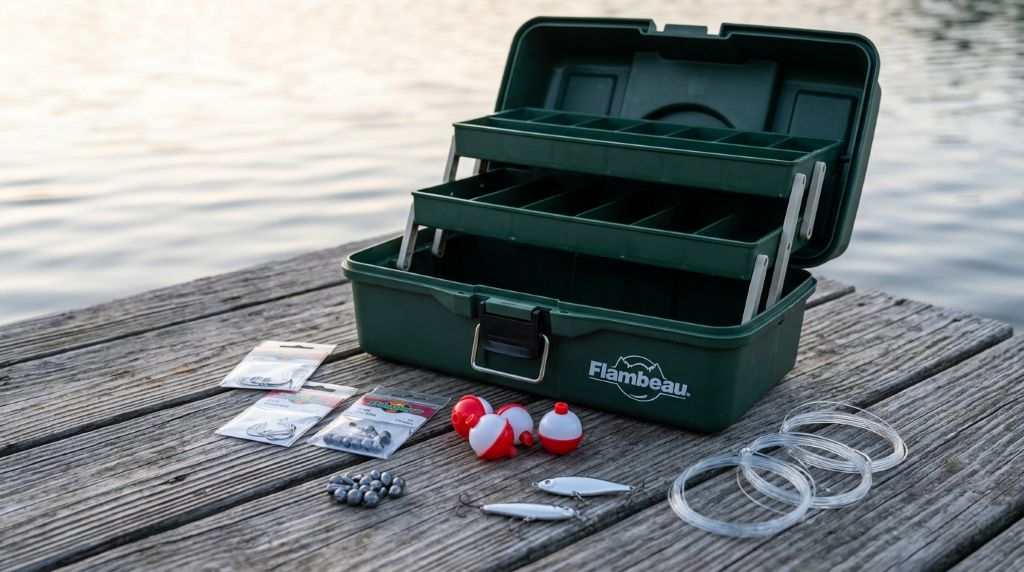
Organizing Tackle by Target Species
Shore anglers often target specific species based on local water access. Sorting tackle by species keeps your box focused and efficient.
- Identify the main species available at your shore fishing spot.
- Group hooks, weights, and lures suited to that species together.
- Remove tackle for species you rarely encounter from shore.
- Keep a small backup section for occasional surprise catches.
- Adjust your box contents seasonally as species patterns shift.
- Label each section clearly for quick access during fishing.
Surf anglers targeting striped bass need different gear than pond anglers. Therefore, tailor your box to your actual local fishing conditions. A generic, all-purpose box often becomes unnecessarily heavy and cluttered.
Seasonal adjustments matter greatly for shore anglers throughout the year. Spring panfish gear differs significantly from fall striper setups. Reviewing your box each season keeps it relevant and lightweight.
Backup sections deserve a small, dedicated space within your box. Surprise catches happen even during focused, species-specific trips. A few extra hooks and weights prepare you for the unexpected.
Essential Shore Fishing Tackle Categories
Certain tackle categories matter most for shore fishing situations. These core items deserve dedicated space in any shore setup.
- Hooks, sorted by size for your target species
- Sinkers and weights, suited to current and surf conditions
- Leaders and swivels for rigging changes
- A small selection of lures matching local baitfish
- Basic tools, including pliers, clippers, and a hook remover
Sinker selection matters more for shore anglers than many realize. Surf and current conditions often require heavier weights than calm water. Therefore, carry a range of weights suited to your typical spot.
Leaders and swivels help you adapt quickly to changing conditions. Switching rigs without proper supplies wastes valuable fishing time. Keep several pre-tied options ready for fast changes.
Lure selection should stay minimal and focused for shore trips. Match your lures to local baitfish rather than carrying every option. This approach keeps your box light without sacrificing effectiveness.
Basic tools remain essential regardless of your fishing style or location. Pliers and clippers see constant use during a typical shore session. Store them in an easily accessible pocket or compartment.
Weatherproofing Your Shore Fishing Tackle
Shore conditions expose tackle to more moisture than boat fishing typically does. Weatherproofing protects your gear from rust and damage.
- Choose boxes with rubber gaskets or waterproof seals
- Store hooks in small, sealed containers within the main box
- Keep a rain cover or dry bag for sudden weather changes
- Avoid leaving tackle boxes open on wet sand or rocks
- Dry your box fully before storing it after each trip
Waterproof seals matter most for anglers fishing exposed surf conditions. Waves and spray reach gear more easily than calm pond settings. Therefore, invest in a box rated for wet environments.
Sealed hook containers add an extra layer of rust protection. Even a weatherproof outer box can experience some internal moisture. Small sealed containers keep your most vulnerable items extra dry.
Sand poses a unique threat that boat anglers rarely face. Grit works into hinges, zippers, and compartment seals over time. Therefore, avoid setting your open box directly on beach sand.
Keeping Your Shore Tackle Box Light and Efficient
Shore anglers benefit most from a minimal, purposeful tackle selection. Follow these tips to avoid unnecessary bulk and weight.
- Remove duplicate lures in colors you rarely use
- Limit your box to one main target species per trip
- Replace bulky packaging with compact, labeled containers
- Carry only the tools you actually use regularly
- Reassess your box contents every few months
Duplicate lures often accumulate without anglers noticing the pattern. Reviewing your box periodically reveals unnecessary weight quickly. Removing rarely used items lightens your load significantly.
Focusing on one target species per trip simplifies your entire setup. This approach reduces decision fatigue while fishing along the shore. It also keeps your box smaller and easier to carry.
Compact containers save space compared to original manufacturer packaging. Transferring lures and hooks into labeled bags reduces overall bulk. This small change makes a noticeable difference over a full day of walking.
Conclusion
Organizing a tackle box for shore fishing comes down to focus and portability. Choose lightweight, weatherproof storage suited to your walking distance. Sort tackle by target species and keep only essential categories packed. These habits reduce fatigue and help you fish more efficiently. Additionally, pairing an organized tackle box with the right setup can make a noticeable difference on the beach, so consider what is the right surf rod length for beach fishing before your next trip.
A lighter, well-organized box makes every shore trip more enjoyable. Take time this week to review and streamline your current setup. Pack smart, walk light, and head to your favorite shore spot with confidence.
Frequently Asked Questions
What size tackle box works best for shore fishing?
Small to medium boxes work best for shore fishing trips. They balance enough capacity with comfortable, lightweight carrying.
Should I bring a full tackle box for a short shore trip?
No, pack only gear suited to your target species. A focused, lighter box improves comfort and efficiency.
How do I protect my tackle from sand and water?
Choose weatherproof boxes with sealed compartments and gaskets. Avoid setting open boxes directly on wet sand.
What tools should I always carry for shore fishing?
Always carry pliers, line clippers, and a hook remover. These tools handle most common shore fishing tasks.
How often should I reorganize my shore fishing tackle box?
Review your box every few months or each new season. This habit removes unused gear and keeps it light.