What’s the safest way to keep your baby warm without raising the room temperature too high?
Keep your baby warm by layering breathable clothing, maintaining a room temperature between 68–72°F (20–22°C), and managing the nursery humidity level between 40–60%. Avoid overheating the room. Instead, focus on safe sleepwear, airflow control, and monitoring your baby’s comfort cues.
Parents often worry about nighttime chills. The instinct is simple: turn up the heat. But overheating increases the risk of dehydration, heat rash, and has been linked to Sudden Infant Death Syndrome (SIDS). According to the American Academy of Pediatrics (AAP), overheating is a preventable risk factor in unsafe sleep environments.
The goal isn’t to make the room hot. The goal is to create a stable, comfortable sleep environment. This guide breaks down practical baby cold prevention strategies that work without turning your nursery into a sauna.
Why is overheating more dangerous than mild cold for babies?
Answer: Overheating interferes with a baby’s ability to regulate body temperature and increases SIDS risk, while mild cold can usually be managed safely with proper layering.
Babies do not regulate body temperature as efficiently as adults. Their sweat glands are immature. They cannot remove layers on their own. If they become too warm, they rely entirely on the caregiver to adjust the environment.
A case-control study published in Pediatrics found that infants sleeping in overheated rooms or wearing excessive bedding had higher SIDS risk compared to infants in moderately cool rooms with proper sleepwear.
Signs of overheating:
- Sweaty neck or back
- Flushed cheeks
- Rapid breathing
- Damp hair
- Heat rash
Signs baby is slightly cold (but not dangerously so):
- Cool hands and feet (normal in many infants)
- Restlessness
Cold hands do not equal a cold baby. Always check the chest or back instead.
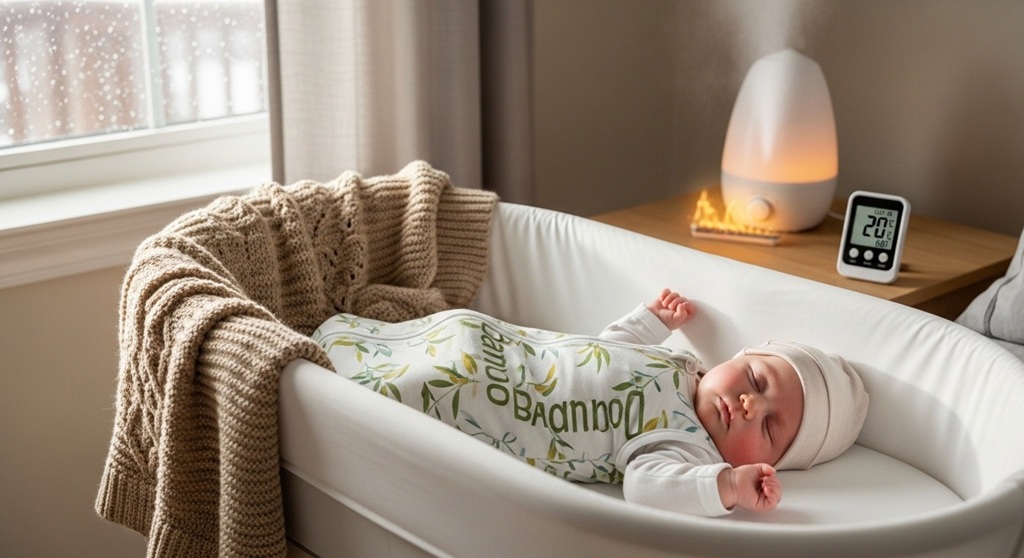
What is the ideal room temperature for baby sleep?
Answer: The ideal nursery temperature is 68–72°F (20–22°C). This range supports safe sleep and reduces overheating risk.
This recommendation comes from pediatric sleep experts and aligns with AAP guidance. A room thermometer is more reliable than guessing. Heating systems can vary by several degrees between settings and actual air temperature.
| Room Temperature | Recommended Clothing |
|---|---|
| Below 68°F (20°C) | Long-sleeve onesie + footed sleeper + sleep sack |
| 68–72°F (20–22°C) | Footed sleeper or onesie + sleep sack |
| Above 72°F (22°C) | Light cotton onesie only |
Consistency matters more than warmth. Avoid drastic overnight temperature swings.
How does nursery humidity level affect baby warmth?
Answer: The ideal nursery humidity level is 40–60%. Proper humidity prevents dry skin, congestion, and heat discomfort while supporting baby cold prevention.
Humidity changes how temperature feels. A dry 70°F room may feel colder. A humid 70°F room may feel warmer.
Low humidity (below 30%):
- Dry nasal passages
- Increased congestion
- Skin irritation
High humidity (above 60%):
- Overheating risk
- Mold growth
- Poor air quality
Use a digital hygrometer to monitor the nursery humidity level. A humidifier in winter can maintain balance. In humid climates, ventilation or a dehumidifier may be necessary.
Balanced humidity makes moderate temperatures feel comfortable without raising thermostat settings.
What clothing layers keep a baby warm safely?
Answer: Use lightweight, breathable layers such as cotton onesies, footed pajamas, and a sleep sack instead of blankets.
Safe sleep guidelines recommend avoiding loose blankets, quilts, and heavy comforters. Instead, use wearable blankets or sleep sacks.
Layering principle: one more layer than an adult would wear in the same room.
Best Layering Strategy
- Base layer: breathable cotton onesie
- Mid layer: footed sleeper
- Outer layer: TOG-rated sleep sack
TOG rating measures warmth:
- 0.5 TOG – warm rooms
- 1.0 TOG – moderate rooms
- 2.5 TOG – cooler rooms
Avoid hats during sleep. Babies release heat through their heads. Covering it may trap excess warmth.
Should you use a room heater in the nursery?
Answer: Yes, but only if necessary and with strict safety precautions. Choose models designed for nursery use and maintain distance from the crib.
Portable heaters can create uneven heating zones. The air near the heater may be significantly warmer than the rest of the room.
Safety rules:
- Place heater at least 3 feet from crib
- Use tip-over protection models
- Never run unattended overnight without safety shut-off
- Avoid gas or propane heaters indoors
Always combine heater use with temperature monitoring.
How can you tell if your baby is comfortably warm?
Answer: Check baby’s chest or back. It should feel warm, not sweaty. Use behavioral cues alongside physical checks.
Quick comfort test:
- Warm chest = good
- Sweaty neck = too hot
- Cold torso = too cool
Behavioral cues matter. A comfortable baby sleeps steadily. Persistent waking with flushed skin suggests overheating more often than cold.
Does swaddling help keep babies warm safely?
Answer: Yes, but use lightweight breathable swaddles and discontinue once baby shows signs of rolling.
Swaddling reduces heat loss and startle reflex. However, thick swaddles plus high room temperature increase overheating risk.
Best practice:
- Use muslin or cotton swaddle
- Avoid double wrapping
- Stop swaddling at first roll attempt
What are common mistakes in baby cold prevention?
Answer: Over-layering, using loose blankets, ignoring humidity levels, and overheating the entire home.
Common errors:
- Adding heavy blankets inside crib
- Using space heaters too close
- Setting thermostat above 75°F
- Ignoring nursery humidity level changes in winter
- Keeping baby in outdoor clothes indoors
Prevention is simple: monitor temperature, layer properly, adjust gradually.
How do seasonal changes affect nursery comfort?
Answer: Winter requires humidity support and layering. Summer requires airflow and lighter fabrics.
Winter Strategy
- Maintain 68–72°F
- Use 2.5 TOG sleep sack if needed
- Add humidifier
Summer Strategy
- Keep blinds closed during day
- Use fan for air circulation (not directly on baby)
- Dress in light cotton
Fans reduce SIDS risk by improving airflow, according to research published in Archives of Pediatrics & Adolescent Medicine.
Conclusion: How can you keep your baby warm the right way?
Keeping your baby warm without overheating the room is about balance. Not extremes. Maintain a steady temperature between 68–72°F. Keep the nursery humidity level at 40–60%. Layer breathable clothing. Avoid loose blankets. Monitor comfort, not just the thermostat.
Small adjustments create safer sleep. Smart baby cold prevention focuses on clothing and environment, not excessive heat.
If your nursery struggles with consistent warmth, review safe heating options here:
best baby-safe room heaters.
Your baby doesn’t need a hot room. They need a stable one.
Frequently Asked Questions
1. What temperature is too cold for a baby at night?
Below 60°F (15°C) may require additional layering. Always prioritize chest warmth over hand temperature.
2. Can a baby get sick from a cold room?
Cold air alone does not cause illness. Viruses do. However, low nursery humidity level can dry nasal passages and increase susceptibility.
3. Is 75°F too warm for a nursery?
Yes. Temperatures above 72°F increase overheating risk, especially with multiple clothing layers.
4. Should babies wear socks to sleep?
If wearing footed pajamas, socks are unnecessary. Avoid doubling layers on feet unless room is below recommended range.
5. Are heated blankets safe for babies?
No. Electric or heated blankets are not recommended for infants due to burn and overheating risk.
6. How do I maintain proper nursery humidity level in winter?
Use a cool-mist humidifier. Clean it weekly. Monitor with a hygrometer to maintain 40–60% humidity.
7. Does a fan make the room too cold?
No. A ceiling or standing fan improves air circulation without significantly lowering room temperature.
Related Topic: How to Maintain a Small Office Shredder for Long-Term Performance
Read Next: How to Find a Foldable Bike Trainer Stand That Saves Space