Off-road cycling is one of the most exciting ways to explore the outdoors. The dirt, the climbs, the descents, and the freedom of the trail are hard to match. However, getting started does not have to cost a fortune. Many riders believe you need to spend thousands to get a bike worth riding. That is simply not true.
Today, the mountain bike market offers real value at lower price points than ever before. Technology has trickled down from high-end models to affordable ones. Therefore, a smart shopper can find a capable off-road bike without emptying their wallet.
This guide will help you understand exactly what to look for. You will learn which features matter most, what to avoid, and how to make a confident choice. Whether you are a complete beginner or returning to the trail after a long break, this article is for you.
Why Affordable Off-Road Bikes Have Come a Long Way
Not long ago, cheap off-road bikes were barely worth riding. They were heavy, poorly assembled, and fell apart quickly. However, the industry has changed dramatically. Manufacturing improvements and increased competition have pushed quality up while keeping prices accessible.
Brands now offer bikes with quality components at entry-level prices. Hydraulic disc brakes, reliable drivetrains, and decent suspension forks are no longer exclusive to expensive models. Additionally, many direct-to-consumer brands have cut out the middleman entirely. This allows them to offer significantly better bikes for the same money.
Therefore, if your last experience with a budget trail bicycle was disappointing, the current market may surprise you. The bikes available today at lower price points would have been considered mid-range just five years ago.
Setting the Right Budget for an Off-Road Bike
Before you start shopping, it helps to understand where the value thresholds are in the market. Not all budget ranges deliver equal results. Knowing what each price range offers will save you from a disappointing purchase.
Under $300
Bikes in this range are generally found at department stores and large retail chains. They look like mountain bikes but rarely perform like them. The components are often heavy, the frames are low-grade steel, and the brakes are weak. These bikes can work for very light, casual use on flat surfaces. However, they are not suitable for actual trail riding.
$300 to $600
This range is where things start to get genuinely useful. Bikes here typically offer aluminum frames, basic but functional suspension forks, and mechanical disc brakes. They can handle moderate trails and will hold up reasonably well. Additionally, upgrading specific components later is a real possibility, which extends the life of the investment.
$600 to $1,000
This is the sweet spot for most entry MTB riders who are serious about trail performance. Bikes here feature better suspension, more reliable shifting, and stronger brakes. The geometry tends to be trail-specific, meaning the bike is actually designed to handle rough terrain. You get real performance without crossing into premium territory.
Frame Material and Why It Matters
The frame is the foundation of any bike. Everything else sits on or connects to it. Therefore, frame material is one of the most important factors to consider when buying an affordable off-road bike.
Aluminum is the best material to look for in an affordable bike. It is lightweight, corrosion-resistant, and strong. Most quality budget bikes use aluminum alloy frames. They ride well and last for years with basic care.
Steel frames are heavier but very durable. They are sometimes found at the lower end of the budget range. A good steel frame can be reliable, but the added weight makes climbing harder and handling slower.
Carbon fiber frames are found on premium bikes and are generally outside the budget range. However, some used or discounted models with carbon frames occasionally appear at accessible prices. Therefore, it is worth keeping an eye on the second-hand market if carbon is important to you.
Avoid bikes where the frame material is not listed or described only as alloy without further detail. Reputable brands are transparent about what they use and why.
Suspension: Hardtail vs. Full Suspension
Suspension is what separates a mountain bike from a regular bicycle. It absorbs impacts from rocks, roots, and rough ground. This protects both the rider and the bike. However, for budget buyers, choosing the right suspension setup is crucial.
Hardtail Mountain Bikes
A hardtail bike has a suspension fork at the front but a rigid rear end. This is the most common setup in affordable off-road bikes. It is also the most recommended for beginners and budget buyers. Hardtails are simpler, lighter, and require less maintenance than full-suspension bikes.
Additionally, hardtails are more efficient on climbs. The rigid rear end transfers your pedaling power directly to the wheel. Therefore, if you ride mixed terrain with a mix of climbing and descending, a hardtail is an excellent choice.
Full Suspension Mountain Bikes
Full suspension bikes have both a front fork and a rear shock. They are more comfortable on rough terrain and provide better traction on descents. However, at low price points, full suspension bikes are generally not recommended. The components used in cheap full-suspension bikes are often poor quality. They add weight and complexity without delivering the performance benefit you would expect.
Therefore, for most budget riders, a quality hardtail will outperform a cheap full-suspension bike in almost every real-world scenario. Put your money into a better hardtail rather than a compromised full-suspension model.
Brakes: Why Disc Brakes Are Essential
Brakes are a safety-critical component. They need to work reliably in all conditions, including wet, muddy, and dusty trails. Therefore, brake quality should be a non-negotiable consideration when choosing an off-road bike.
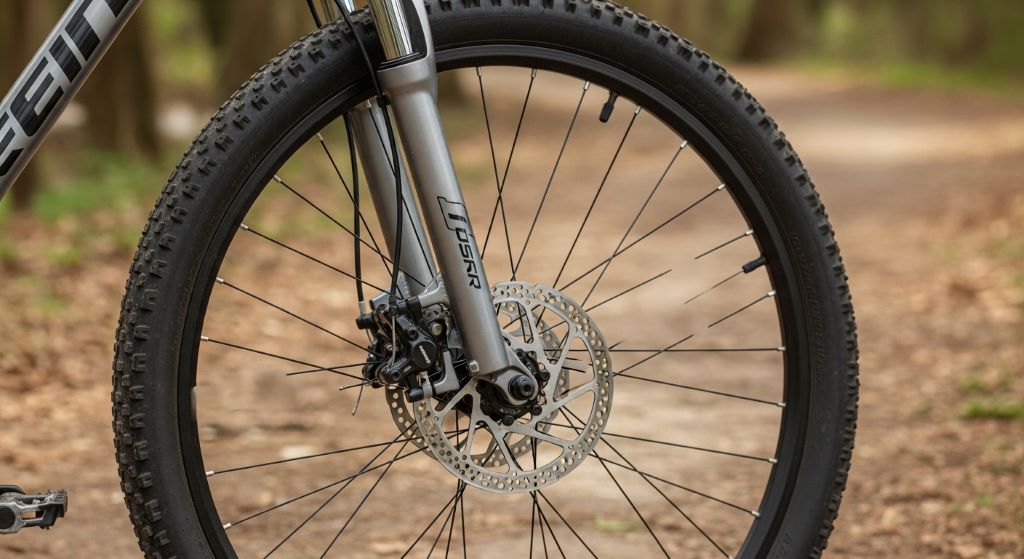
Disc brakes are the standard for mountain bikes today. They use a rotor attached to the wheel hub and a caliper that grips the rotor to stop the bike. They work significantly better than rim brakes in off-road conditions, especially when wet.
Mechanical Disc Brakes
Mechanical disc brakes use a cable to actuate the caliper. They are found on most bikes in the $300 to $600 range. They work well and are easy to adjust and maintain at home. For most entry-level riders, mechanical disc brakes are perfectly sufficient.
Hydraulic Disc Brakes
Hydraulic disc brakes use fluid to actuate the caliper. They provide more consistent, powerful stopping with less hand effort. They are found on bikes in the $600 and above range. If your budget allows, hydraulic brakes are a meaningful upgrade that you will feel on every ride.
Avoid any off-road bike that uses rim brakes or V-brakes. These are not appropriate for trail use and can be dangerous on wet or steep terrain.
Drivetrain and Gears: What You Really Need
The drivetrain includes everything that propels the bike: the chain, chainring, cassette, and derailleurs. A reliable drivetrain is essential for off-road riding because you constantly shift gears on varying terrain.
Modern mountain bikes typically use a 1x drivetrain, meaning one chainring at the front and multiple sprockets at the rear. This setup is simpler, lighter, and less likely to drop the chain on rough ground. Look for bikes with a 1×8, 1×9, or 1×10 setup. These provide a wide enough gear range for most trails.
Older 3x or 2x drivetrains, which use multiple chainrings at the front, are still found on some budget models. They work, but they are heavier and more complex. Additionally, front derailleurs require more frequent adjustment and can be frustrating on rough terrain.
Shimano is the most trusted brand at budget price points. Their Altus, Acera, and Alivio groupsets are reliable and widely used on affordable off-road bikes. SRAM also offers solid entry-level options. Therefore, check the brand and model of the drivetrain components before buying.
Wheel Size: 27.5 vs 29 Inch
Wheel size affects how a bike handles on the trail. There are two dominant sizes in modern mountain biking: 27.5 inch and 29 inch. Each has its own character and suits different riders.
29-inch wheels roll over obstacles more easily. They maintain speed better and feel more planted on the trail. Taller riders and those who prioritize efficiency and speed tend to prefer this size. Most trail and cross-country bikes now come in 29 inch.
27.5-inch wheels are lighter and more agile. They accelerate faster and feel more responsive through tight corners. Shorter riders and those who enjoy technical, twisting trails often prefer this size.
However, at the budget end of the market, the difference matters less than overall bike quality. Choose the size that fits your height and riding style. Both will perform well when paired with a properly built bike.
Fit and Geometry: Getting the Right Size
A bike that does not fit properly will never perform well, regardless of its components. Fit is one of the most overlooked factors by new buyers. Therefore, take sizing seriously before making any purchase.
Mountain bike sizing is based primarily on your height and inside leg measurement. Most brands provide a sizing chart that maps your measurements to a frame size. Use these charts carefully. When in doubt between two sizes, consider your riding style. More aggressive riders often prefer a slightly larger frame for better stability at speed.
Additionally, reach, stack, and wheelbase all affect how a bike feels. Modern trail geometry tends to be longer and lower than older designs. This improves stability on descents while keeping the bike manageable on climbs. Look for bikes that describe their geometry as modern or progressive, as these are designed specifically for off-road use.
Where to Buy an Affordable Off-Road Bike
Where you buy matters as much as what you buy. Choosing the right retailer ensures you get proper assembly, honest product information, and accessible support after purchase.
Local bike shops are the best option for most buyers. The staff can advise you based on your local trail conditions, help you find the right size, and assemble the bike properly. Additionally, they can service the bike after purchase. A relationship with a local shop is genuinely valuable over the long term.
Direct-to-consumer online brands often offer better value for money. They skip the distributor and retail markup, passing savings to you. However, you receive the bike partially assembled and must complete the build yourself or pay a local shop to do it.
The second-hand market is also worth exploring. A used bike from a reputable brand at the $600 to $800 level will almost always outperform a new entry MTB at the same price. Platforms like Facebook Marketplace and specialist cycling forums are good places to start.
Avoid buying off-road bikes from general merchandise stores. These bikes are assembled by non-specialist staff, use low-grade components, and often create safety risks. They may look like mountain bikes, but they are not built to handle actual trail conditions.
Essential Accessories to Budget For
Buying the bike is only part of the cost. There are several accessories you will need before hitting the trail. Factoring these into your overall budget from the start avoids surprises.
- Helmet: This is non-negotiable. A good quality trail helmet costs between $50 and $150. Do not compromise on head protection.
- Gloves: Padded cycling gloves improve grip and protect your hands in a fall. They also reduce hand fatigue on long rides.
- Flat pedals or clipless pedals: Most budget bikes come with basic plastic pedals. Upgrading to a flat metal pedal significantly improves grip and control.
- Repair kit: Carry a spare tube, tyre levers, and a mini pump on every ride. Punctures are common and being unprepared is frustrating.
- Hydration pack or water bottle: Staying hydrated on the trail is critical. Most off-road riders prefer a hydration backpack that also carries tools and gear.
Additionally, a good lock is essential if you plan to leave the bike unattended anywhere. Therefore, allow an extra $100 to $200 in your overall budget for these essentials.
Conclusion
Finding a cheap off-road bike that genuinely performs well is entirely possible. The key is knowing where to focus your attention and where to avoid cutting corners.
Prioritize an aluminum hardtail frame with disc brakes and a reliable drivetrain. Look for a 1x gear system, quality suspension fork, and trail-specific geometry. Set a realistic budget and understand what each price range delivers. Buy from a reputable brand or a trusted local shop rather than a general retailer.
Additionally, do not forget to budget for the essential accessories that make trail riding safe and enjoyable. A well-chosen budget trail bicycle paired with the right gear can deliver years of fun on the trail without requiring a significant financial commitment.
The trail is waiting. With the right knowledge, you are ready to choose a bike that will take you there confidently, safely, and within budget.
Frequently Asked Questions
1. What is a reasonable budget for a beginner off-road bike?
For a bike that can handle real trails safely and enjoyably, aim to spend at least $400 to $500 on a new bike. However, the $600 to $1,000 range offers noticeably better components and performance. If your budget is tighter, consider a quality used bike from a reputable brand rather than a cheap new one.
2. Is a hardtail or full-suspension bike better for beginners?
A hardtail is almost always the better choice for beginner and budget riders. It is lighter, simpler, and more efficient than a cheap full-suspension bike. The money you save on complexity can be directed toward better components. Additionally, learning to ride on a hardtail builds better technical skills, which translates well if you upgrade to full suspension later.
3. Can I upgrade a cheap mountain bike to make it better?
Yes, within limits. A bike with a quality frame can be upgraded over time. Common upgrades include pedals, saddle, grips, and eventually brakes or drivetrain components. However, if the frame itself is poor quality, upgrades will not fix the fundamental problem. Therefore, invest in the best frame you can afford and upgrade components gradually.
4. What should I look for when buying a used mountain bike?
Check the frame for cracks, dents, or heavy scratches, especially around the welds. Test the brakes and shifting to ensure they work smoothly. Check the suspension fork for oil leaks and smooth movement. Spin the wheels to check for wobbles. Additionally, check the chain for wear using a chain wear indicator tool, which is inexpensive and very useful. If possible, take the bike for a short test ride before buying.
5. Are bikes sold at large retail chains worth buying for off-road riding?
Generally, no. Bikes sold at department stores and large general retailers are typically assembled by non-specialist staff using very low-grade components. They are designed to look like mountain bikes but are not built to handle actual trail conditions. For genuine off-road use, purchase from a dedicated bike shop, a specialist online retailer, or a direct-to-consumer cycling brand that builds proper entry MTB models.
Related Topics:
How to Find Affordable Cordless Power Tools Without Losing Quality
How to Find the Best Rope Dog Leash for Strong and Active Dogs