Choosing the right golf iron set can be overwhelming with so many options out there. The right irons can make the difference between a great round and a frustrating day. In this guide, you’ll learn how to compare golf iron sets before buying, what features truly matter, and how to find irons tailored to your skill level and style. We break down the essentials to help you buy with confidence.
Snippet Answer: Comparing golf iron sets involves analyzing key factors like clubhead design, shaft material, forgiveness, set composition, and price. Understanding these details helps you pick irons that match your skill level and playing goals, ensuring you get the best performance and value from your investment.
What are the most important factors when comparing golf iron sets?
When comparing golf iron sets, focus on clubhead design, material, shaft type, set composition, forgiveness, and cost. These elements directly affect performance, feel, and suitability for your game.
Golfers should prioritize clubs that fit their play style and skill level. Here’s a quick breakdown of the crucial factors:
- Clubhead Design: Cavity back irons offer more forgiveness, while blade irons provide control for skilled players.
- Shaft Type: Steel shafts are more accurate; graphite shafts are lighter and reduce vibration.
- Set Composition: Ensure the set includes the irons you use most, like 5-iron through pitching wedge.
- Forgiveness: Game-improvement irons are designed for higher handicap players who need more leeway on off-center hits.
- Material: Stainless steel is common, but forged irons offer a distinct feel.
- Price: Set your budget and weigh performance versus cost.
By assessing each aspect, you’ll better understand which iron set meets your needs and enhances your performance on the course.
How does a golfer’s skill level affect the choice of iron set?
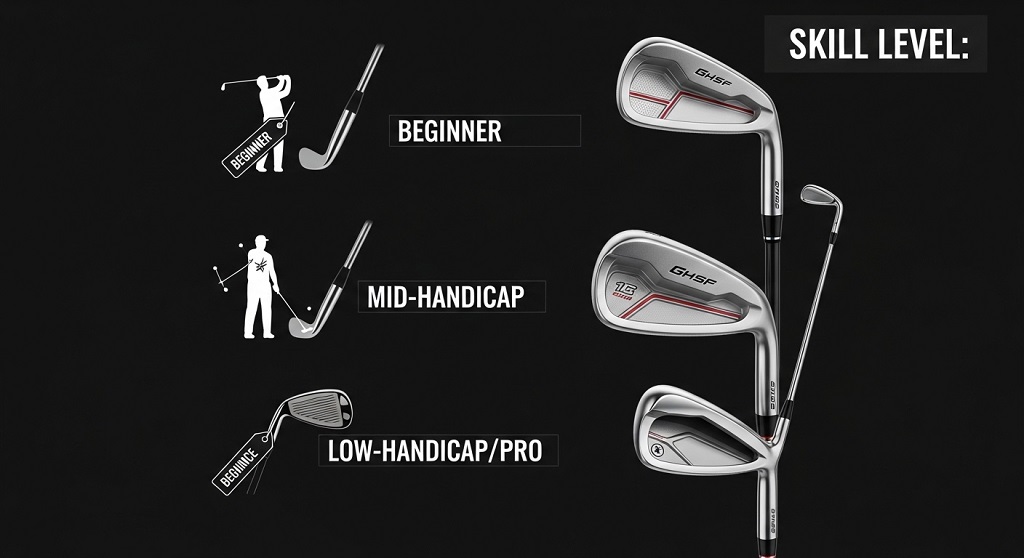
Your skill level should directly influence which iron set you choose. Beginners need more forgiving clubs, while advanced players benefit from irons with precision and shot-shaping ability.
Beginner or High Handicap Golfers:
- Look for game-improvement irons with larger clubheads and perimeter weighting.
- These provide maximum forgiveness and higher launch.
Mid Handicap Golfers:
- Consider cavity back irons with a solid balance of forgiveness and control.
- Progressive sets that blend game improvement and player’s irons are a great option.
Low Handicap or Advanced Golfers:
- Choose muscle-back/blade irons for better shot shaping and enhanced feedback.
- Smaller sweet spots but greater control for shaping shots.
Always try out clubs before buying to see how they match your swing and comfort level.
What is the difference between blade and cavity back irons?
Cavity back irons have a hollowed-out rear, increasing forgiveness, while blade irons feature a solid, thin profile for enhanced control and feel preferred by skilled players.
Cavity Back Irons:
- Larger clubheads with perimeter weighting
- High forgiveness on off-center hits
- Best for beginners and mid handicaps
Blade Irons (Muscle Back):
- Compact, solid construction
- Offers precision and feedback
- Low to zero perimeter weighting
- Preferred by low handicappers and professionals
Understanding your needs helps you pick between maximum forgiveness or shot-making precision.
How does shaft material impact performance in golf iron sets?
Shaft material—primarily steel or graphite—affects weight, flex, feel, and shot accuracy. Steel shafts suit golfers seeking control, while graphite shafts benefit those desiring lighter clubs and comfort.
Steel Shafts: Heavier, promote control and accuracy, recommended for players with faster swings and those seeking shot consistency.
Graphite Shafts: Lighter, reduce swing fatigue and vibration. Ideal for slower swingers, seniors, or players with joint issues.
Try both types to determine which feel and flex produce better distance and comfort for your swing speed and strength.
What should you look for in the composition of a golf iron set?
A typical iron set includes irons ranging from 3 or 4 iron through pitching wedge, but modern sets may start at 5 or 6 iron and add specialty wedges. Customizable sets fit individual needs best.
Ideally, your set composition should cover the distances you regularly face, so gaps between clubs are manageable. Many golfers now prefer to include hybrids for the longer irons, as they provide more forgiveness and easier launch. Be sure the set provides:
- All key irons for your playing style (and hybrids, if needed)
- Gap, sand, or approach wedges for short game versatility
- Consistent shaft type and flex across all clubs
Visit a club fitter or golf shop for recommendations tailored to your style and swing.
Are brand reputation and price important when comparing golf iron sets?
Brand reputation influences quality assurance, innovation, and resale value, while price reflects materials, technology, and brand. Both should weigh into your decision, but performance and fit remain most important.
Established brands like Titleist, Callaway, or TaylorMade maintain rigorous quality control and often introduce new technologies. However, lesser-known brands can offer excellent value and performance for less. Don’t overlook:
- Warranty and after-sales support
- Club fitting options
- Resale value if you plan to upgrade in the future
Compare models within your budget bracket—as shown in the table below—rather than just going for the most expensive set.
Comparison Table: Popular Golf Iron Sets (2024)
The table below summarizes how to compare golf iron sets based on key specs and features. Always test clubs and consult fitters, but this can guide your initial research.
| Model | Type | Forgiveness | Shaft Material | Price Range | Main Advantage |
|---|---|---|---|---|---|
| Callaway Rogue ST Max | Cavity Back | High | Steel/Graphite | $850 – $1200 | Maximum distance and forgiveness |
| Titleist T100 | Blade | Low | Steel | $1200 – $1400 | Tour-level precision |
| TaylorMade Stealth | Cavity Back | Moderate | Steel/Graphite | $1000 – $1300 | Distance and feel blend |
| PING G430 | Cavity Back | Very High | Steel/Graphite | $1100 – $1350 | High launch and forgiveness |
How do you test and evaluate golf iron sets before buying?
Testing involves hitting different irons at a golf retailer or demo day, focusing on feel, distance, accuracy, and consistency. Evaluation should also consider custom fitting, shaft flex, and grip size.
- Visit a store or fitting center with launch monitor technology.
- Test several models side-by-side. Compare data such as ball speed, launch angle, and distance.
- Pay close attention to feel, sound, and feedback on good and poor strikes.
- Ask a club fitter about custom shafts or lie adjustments for your swing.
- Test both steel and graphite shafts to confirm your preference.
Don’t rush. Take notes and revisit your top choices before making a final decision.
What common mistakes should you avoid when comparing golf iron sets?
Avoid choosing solely based on brand, price, or looks. Focus on fit, performance, and customizability for optimal results on the course.
Common mistakes include:
- Not getting fitted—clubbing off-the-rack rarely matches individual swings.
- Ignoring the importance of shaft flex and material.
- Buying the latest technology that doesn’t suit your needs.
- Overlooking set composition and not addressing distance gaps.
- Prioritizing appearance over feel and performance.
Take your time and rely on unbiased performance data, not just marketing claims.
How do custom fitting and demo days help when comparing golf iron sets?
Custom fitting and demo days let you test clubs tailored to your swing and body, ensuring your irons match your needs for distance, accuracy, and comfort.
During a fitting session, professionals use advanced tools to analyze your swing speed, attack angle, and launch characteristics. This data is used to recommend the ideal iron head, shaft flex, length, and grip. Demo days allow you to compare brands and models in realistic course or range conditions. Always participate in these events if possible—they can result in dramatic improvements to your game and satisfaction with your purchase.
Conclusion: What’s the best way to compare and choose your next set of irons?
Comparing golf iron sets is about understanding your game and matching irons to your unique playing style, skill level, and goals. Don’t get overwhelmed by choices or brands—focus on core factors like forgiveness, shaft type, feel, and set composition. Getting professionally fitted and testing clubs will help you make an informed decision that boosts your confidence and scoring ability. Ready to elevate your golf game with the perfect irons? Visit your local retailer or a certified fitter today and try out the latest models tailored to your needs!
FAQ: Comparing Golf Iron Sets
How many irons should a typical set include?
A standard iron set includes six to eight clubs, usually ranging from 4-iron to pitching wedge. Some sets include additional wedges or hybrids for greater versatility.
Can I mix and match irons from different brands?
Yes, many players mix and match irons for optimal performance. However, it’s important to ensure shaft type, length, and loft progression remain consistent to avoid distance gaps.
Is it better to buy new or used golf iron sets?
Both options have merits. New sets offer the latest technology and warranties. Used sets provide savings but may show wear. Always inspect used clubs for wear, cracks, or damage before buying.
How often should I replace my irons?
Most golfers replace irons every 5–7 years, depending on use, wear, and advances in technology. If you notice loss of distance, feel, or visible damage, it’s time to consider new irons.
What’s the importance of getting fitted for irons?
Fitting ensures your clubs match your swing, grip size, and stance, maximizing distance and consistency. Proper fitting reduces injury risk and improves your enjoyment of the game.
Do women and seniors need different iron sets?
Yes. Women’s and senior sets usually feature lighter graphite shafts, higher lofts, and shorter club lengths to compensate for slower swing speeds and enhance launch and distance.
What should I do if I’m undecided between two models?
If torn between two models, test both at a fitting center. Rely on swing data, launch monitor feedback, and personal comfort to guide your final choice. Choose the irons that inspire the most confidence.
Read More Also: How to Find Affordable Cordless Power Tools Without Losing Quality
Learn More: How to Find the Best Rope Dog Leash for Strong and Active Dogs