

Running shoes have evolved dramatically over the past few decades. Today’s footwear incorporates advanced materials and engineering principles that make running more comfortable and efficient. At the heart of this evolution lies foam cushioning technology, which has transformed how athletes and casual runners experience their sport.
Understanding how these materials work can help you make better choices when selecting your next pair of running shoes. This knowledge also reveals the fascinating science behind something we often take for granted.
The Science Behind Foam Cushioning
Foam cushioning in running shoes serves multiple purposes. First, it absorbs impact forces when your foot strikes the ground. Second, it returns energy to propel you forward with each step. Finally, it provides stability and support throughout your running stride.
When you run, your foot generates forces several times your body weight. These forces travel through your skeletal system with each footfall. Cushioning materials help disperse these forces, reducing stress on your joints and muscles.
The effectiveness of cushioning depends on several factors. Material composition, foam density, and structural design all play crucial roles. Manufacturers continuously experiment with new formulations to achieve the perfect balance between softness and support.
Traditional EVA Foam Technology
Ethylene-vinyl acetate has been a cornerstone of running shoe construction for decades. This lightweight polymer foam offers excellent shock absorption at an affordable price point. EVA foam shoes remain popular among runners worldwide because of their proven performance and accessibility.
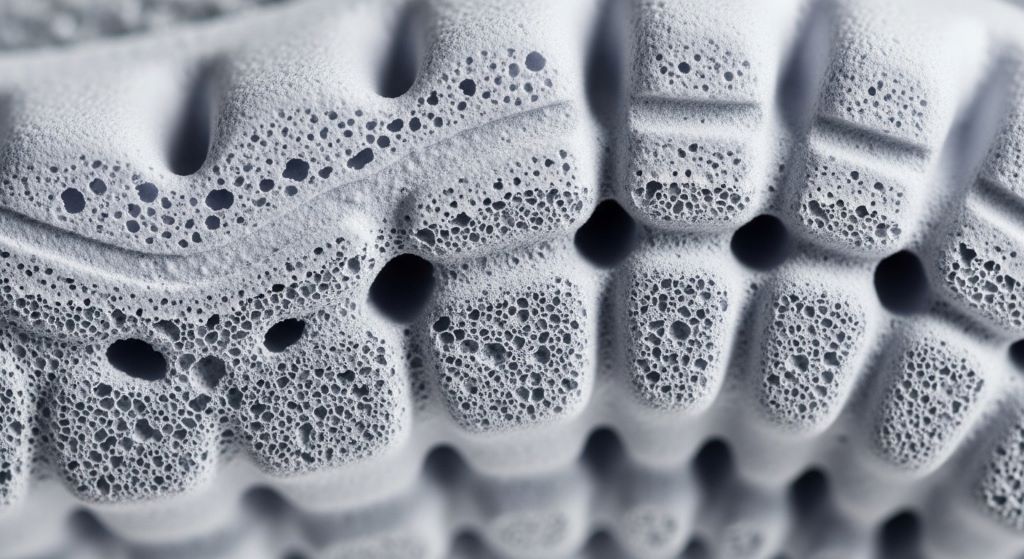
The manufacturing process for this material involves heating and expanding polymer beads. As these beads expand, they create tiny air pockets throughout the foam structure. These air pockets compress when you land, absorbing impact energy. Then they spring back to their original shape, ready for your next stride.
Traditional formulations work well for moderate distances and everyday training. However, they have limitations. Over time, the material compresses permanently, losing its cushioning properties. Temperature also affects performance, with the foam becoming firmer in cold weather and softer in heat.
Evolution of Responsive Cushioning Systems
Modern running shoes have moved beyond basic shock absorption. Today’s designs focus on energy return and propulsion efficiency. Responsive cushioning technology represents a significant advancement in this area.
These newer systems use specialized foam compounds that bounce back more quickly after compression. The faster recovery means less energy is lost with each footfall. Additionally, the materials maintain their properties better over the shoe’s lifespan.
Manufacturers achieve these improvements through various methods. Some add thermoplastic polyurethane to the foam mixture. Others use supercritical foam processes that create more uniform cell structures. Still others incorporate nitrogen or other gases during manufacturing to enhance resilience.
The result is footwear that feels livelier and more energetic. Runners often describe these shoes as having a “springy” or “bouncy” sensation. This feeling translates to measurable performance benefits, particularly during longer runs.
How Compression and Rebound Work Together
Understanding the relationship between compression and rebound is essential to grasping modern cushioning technology. When your foot strikes the ground, the foam compresses in milliseconds. This compression absorbs the initial impact shock.
Immediately after maximum compression, the foam begins to rebound. The speed and completeness of this rebound determine how much energy returns to your stride. Higher quality materials rebound faster and more completely, wasting less energy.
Think of it like a basketball. A properly inflated basketball bounces back quickly and efficiently. A deflated one barely bounces at all. Running shoe cushioning works on the same principle, though the mechanisms are more complex.
The ideal cushioning system compresses enough to protect your joints but rebounds quickly enough to assist your forward motion. Finding this balance requires sophisticated engineering and extensive testing.
Foam Density and Its Impact on Performance
Density significantly affects how cushioning performs. Lower density foams feel softer and compress more easily. Higher density foams feel firmer and provide more support.
Manufacturers often use different densities in various parts of the shoe. The heel might contain softer foam for impact absorption. The forefoot might use firmer foam for propulsion. This strategic placement optimizes performance throughout your gait cycle.
Runner weight also influences the ideal density. Heavier runners typically benefit from firmer, higher density foams that resist bottoming out. Lighter runners often prefer softer formulations that compress more readily.
Your running style matters too. Heel strikers need more cushioning in the rear of the shoe. Forefoot strikers require enhanced cushioning under the ball of the foot. Midfoot strikers benefit from balanced cushioning throughout.
Midsole Construction Techniques
The midsole houses the primary cushioning in most running shoes. Modern construction techniques vary widely, each offering distinct advantages.
Compression molding is a traditional method that produces consistent, durable midsoles. The foam is heated and pressed into shape under high pressure. This process creates uniform density throughout the midsole.
Injection molding allows for more complex designs with varying densities in different zones. Liquid foam is injected into molds where it expands and hardens. This technique enables manufacturers to fine-tune cushioning properties with great precision.
Some brands now use 3D printing technology to create lattice structures within the midsole. These structures provide targeted support and cushioning exactly where needed. While still expensive, this approach represents the future of personalized footwear.
The Role of Geometry in Cushioning Performance
Foam composition is only part of the equation. The shape and structure of the midsole also dramatically affect how cushioning performs.
Thickness plays an obvious role. Thicker midsoles generally provide more cushioning, though they can compromise ground feel and stability. Manufacturers must balance protection with responsiveness.
Rocker geometries have become increasingly popular in modern running shoes. These curved sole designs promote smooth transitions from heel strike to toe-off. They work in conjunction with cushioning materials to enhance running efficiency.
Segmentation is another important consideration. Some shoes feature grooves or cuts in the midsole that allow different sections to move independently. This flexibility improves adaptability to various surfaces and running styles.
Multi-Density and Dual-Layer Systems
Many high-performance running shoes now incorporate multiple foam types within a single midsole. This approach allows designers to optimize different performance characteristics simultaneously.
A common configuration places softer foam on top for immediate comfort against the foot. Firmer foam below provides stability and prevents excessive compression. This dual-layer system delivers both plush feel and reliable support.
Some shoes use different foams in the medial and lateral sides. Firmer foam on the inside edge can reduce overpronation. Softer foam on the outside accommodates natural foot motion. This lateral differentiation helps runners with specific biomechanical needs.
Transition zones between different foam types require careful engineering. Abrupt changes can create uncomfortable pressure points or instability. Gradual transitions ensure smooth, natural-feeling strides.
Temperature and Environmental Effects
Environmental conditions significantly impact how cushioning materials perform. Temperature is particularly influential on foam behavior.
Cold weather causes most foams to stiffen. This firmness can reduce shock absorption and energy return. Conversely, hot weather softens foams, potentially leading to excessive compression and reduced support.
Premium running shoes use formulations designed to minimize temperature sensitivity. These materials maintain more consistent performance across wider temperature ranges. However, no foam is completely immune to environmental effects.
Moisture also affects some cushioning materials. Water absorption can increase weight and alter compression characteristics. Modern designs often include barriers or water-resistant treatments to mitigate these effects.
Durability and Lifespan Considerations
All cushioning materials degrade over time and use. Understanding this degradation helps runners know when to replace their shoes.
Most running shoes lose approximately 30 to 50 percent of their cushioning properties after 300 to 500 miles. The exact lifespan depends on runner weight, running style, and surface type. Heavier runners and those who run primarily on concrete wear out shoes faster.
Visual inspection only tells part of the story. Shoes may look fine externally while the cushioning has significantly degraded internally. Paying attention to how your shoes feel is more important than how they look.
Some newer foam formulations claim extended durability. While improvements are real, all cushioning eventually wears out. Rotating between multiple pairs of shoes can extend the effective lifespan of each pair.
Matching Cushioning to Your Running Needs
Selecting appropriate cushioning depends on multiple factors. Distance is a primary consideration. Longer runs generally benefit from more substantial cushioning to reduce cumulative impact stress.
Running speed also influences ideal cushioning. Faster paces often work better with firmer, more responsive cushioning that doesn’t waste energy. Slower, recovery runs might feel better in softer, more forgiving shoes.
Surface type matters significantly. Trail running typically requires different cushioning than road running. Trails offer natural shock absorption, so shoes can use firmer foams for better ground feel and stability.
Your injury history should inform your choices too. Previous stress fractures or joint problems might indicate the need for maximum cushioning. Runners without injury history have more flexibility in their selections.
Conclusion
Foam cushioning technology in modern running shoes represents decades of research and development. From traditional EVA foam shoes to advanced responsive cushioning systems, the evolution has been remarkable. Understanding how compression, rebound, density, and geometry work together helps runners make informed footwear choices.
The ideal cushioning varies based on individual needs, running style, and environmental conditions. No single solution works for everyone. However, today’s variety of options means almost every runner can find shoes that enhance their performance and comfort.
As materials science advances, we can expect even more sophisticated cushioning technologies. These innovations will continue pushing the boundaries of what’s possible in running footwear. For now, runners have access to more effective cushioning options than ever before.
Frequently Asked Questions
What is the main difference between EVA foam and newer cushioning technologies?
EVA foam provides basic shock absorption at an affordable price but compresses permanently over time. Newer technologies offer better energy return, maintain properties longer, and perform more consistently across different temperatures. They typically cost more but deliver enhanced performance and durability.
How do I know when my running shoe cushioning has worn out?
Pay attention to how your shoes feel rather than how they look. Increased soreness after runs, especially in your joints, often indicates degraded cushioning. Most shoes need replacement after 300 to 500 miles, though this varies based on your weight and running style.
Does more cushioning always mean better protection?
Not necessarily. Excessive cushioning can reduce stability and ground feel, potentially affecting your running form. The best amount of cushioning balances protection with responsiveness and stability. Your ideal level depends on your weight, running style, and injury history.
Why do some running shoes feel different in cold weather?
Most foam materials stiffen when temperatures drop and soften when temperatures rise. This temperature sensitivity affects compression and rebound characteristics. Premium shoes use specialized formulations that minimize these effects, maintaining more consistent performance across temperature ranges.
Can I extend the life of my running shoe cushioning?
Rotating between multiple pairs gives each shoe time to fully decompress between runs, which can extend lifespan. Storing shoes at room temperature and keeping them dry also helps. However, all cushioning eventually degrades with use, and replacement is inevitable for active runners.
Related Topics:
Functional Fitness Gym Workouts for Everyday Tasks
How HSA Can Help Reach Spring Break Body Goals


