Old steel frames often develop rust because moisture, road salt, and changing weather slowly damage exposed metal. According to the National Association of Corrosion Engineers, corrosion costs billions annually across infrastructure and transportation. Likewise, many cycling enthusiasts enjoy vintage road bike restoration because strong steel frames often deserve another life. With the right process, you can remove rust safely, protect valuable metal, and extend your frame’s lifespan without expensive replacement.
Understand Rust Before Starting Repairs
Rust forms when iron reacts with oxygen and moisture over time. Therefore, identifying the damage level helps you choose the correct repair method.
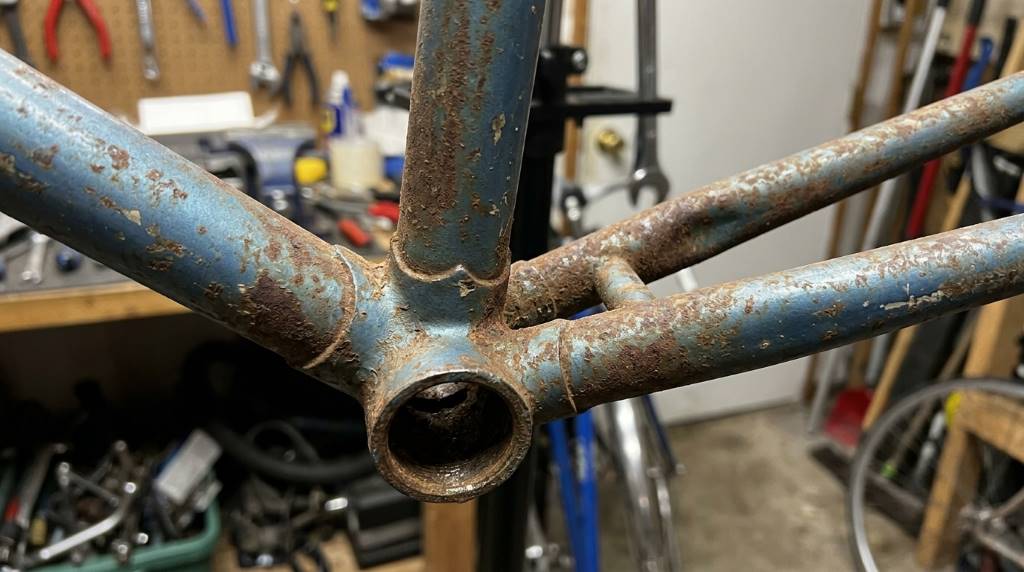
Surface rust usually appears as light orange discoloration without deep pitting. However, advanced corrosion creates flaky metal that requires more careful restoration.
Preparing your workspace also improves safety and repair quality. Many hobbyists first organize tools after reading guides about indoor bike trainer setup because stable work areas reduce mistakes.
Gather Essential Tools and Safety Equipment
Collecting everything beforehand saves time and prevents interruptions during restoration. Besides that, quality tools produce cleaner and longer lasting results.
- Safety glasses
- Nitrile gloves
- Dust mask
- Wire brush
- Sandpaper in several grits
- Rust remover
- Clean microfiber cloths
- Metal primer
- Rust resistant paint
- Clear protective coating
A stable repair stand keeps the frame secure during cleaning and painting. Likewise, many restorers appreciate advice about the best bike trainer stand because secure support minimizes accidental damage.
Inspect the Entire Steel Frame Carefully
Examine every tube under bright lighting before removing any rust. Meanwhile, pay close attention to welds, joints, and hidden corners.
Use a small flashlight to inspect hard to reach areas thoroughly. Furthermore, tap suspicious sections gently because weakened metal sometimes sounds noticeably different.
Check Structural Integrity
Deep holes, severe cracks, or major thinning often indicate structural failure. Consequently, replacing the damaged frame may become the safer option.
Identify Surface Rust
Surface rust remains limited to the outer coating without weakening the frame. Therefore, proper cleaning usually restores the original strength successfully.
Remove Loose Rust Effectively
Begin with a wire brush to remove flaky corrosion from affected areas. Next, wipe away loose debris before switching to sandpaper.
Start sanding with medium grit before finishing with finer grit paper. As a result, the cleaned metal develops a smoother surface for primer adhesion.
Work patiently around corners and welds to avoid scratching healthy paint unnecessarily. Moreover, frequent inspection prevents removing more metal than necessary.
Apply Rust Remover Correctly
Select a rust remover designed specifically for steel restoration projects. Then, follow the manufacturer’s instructions carefully for the best outcome.
Allow the solution enough time to dissolve remaining oxidation completely. Afterward, rinse or wipe the treated surface according to product directions.
Dry the frame immediately using clean microfiber cloths after treatment. Otherwise, leftover moisture may trigger fresh rust formation very quickly.
Prepare the Surface for Painting
Clean every repaired section using a wax and grease remover before priming. Consequently, paint bonds more effectively with the prepared surface.
Apply a thin metal primer evenly across every exposed steel area. Additionally, multiple light coats perform better than one heavy application.
Choose the Right Primer
Rust inhibiting primers create a durable foundation for protective paint layers. Therefore, investing in quality primer often increases restoration longevity.
Allow Proper Drying Time
Every coating requires sufficient drying before adding another layer. Otherwise, trapped solvents may weaken the final protective finish.
Paint and Seal the Steel Frame
Select paint formulated specifically for outdoor metal surfaces whenever possible. Likewise, matching original colors preserves the classic appearance beautifully.
Spray or brush thin coats evenly across the repaired sections only. Then, wait for complete drying before applying additional coats.
Finish the restoration with a durable clear protective coating afterward. Consequently, moisture struggles to reach the steel beneath the finish.
Prevent Rust from Returning
Regular maintenance protects restored steel from future corrosion problems. Therefore, inspect the frame several times throughout each year.
Store the frame in a dry and well ventilated location whenever possible. Besides that, wipe away water immediately after wet weather exposure.
Apply protective wax periodically to strengthen the painted finish further. As a result, dirt and moisture remain easier to remove during cleaning.
- Keep the frame dry after every ride.
- Inspect paint chips quickly.
- Touch up damaged coatings immediately.
- Clean road grime regularly.
- Avoid long term outdoor storage.
Common Mistakes to Avoid
Many restoration projects fail because owners rush important preparation steps. Instead, spend extra time cleaning and inspecting the frame thoroughly.
Skipping primer often reduces paint durability significantly over time. Likewise, applying thick paint coats frequently causes uneven drying and peeling.
Never ignore deep structural corrosion that weakens important load bearing sections. Consequently, professional evaluation becomes the safest decision for severe damage.
Conclusion
Fixing rust on old steel frames requires patience, careful preparation, and quality protective materials. Fortunately, consistent maintenance keeps restored metal looking attractive for many years.
Start your restoration today using these proven steps and inspect your frame regularly afterward. Small repairs completed early prevent expensive damage while preserving classic steel for future adventures.
FAQs
Can I repair surface rust without replacing the frame?
Yes, surface rust usually responds well to proper cleaning, priming, and repainting.
How often should I inspect a restored steel frame?
Inspect the frame every few months and after riding in wet conditions.
Is sanding always necessary before painting?
Yes, sanding improves primer adhesion and creates a smoother finished surface.
What causes rust to return after repairs?
Moisture, damaged paint, and poor surface preparation commonly allow rust to reappear.
Should I repair deep rust myself?
No, severe structural corrosion should receive professional inspection before further use.