Last winter, a friend of mine spent $400 on a bike trainer stand that vibrated so badly his downstairs neighbor filed a noise complaint within a week. That purchase sits in his garage now, collecting dust. Choosing the wrong indoor cycling trainer wastes money, kills motivation, and turns a promising fitness habit into frustration. The best bike trainer stand matches your riding goals, fits your space, and keeps noise at a level that won’t get you evicted.
A bike trainer stand is a stationary device that holds your bicycle in place, converting it into an indoor cycling machine. It lets you ride year-round regardless of weather, traffic, or daylight. The right one depends on resistance type, noise output, compatibility with your bike, and whether you plan to use smart training apps.
What Makes a Good Bike Trainer Stand Worth Buying?
A good bike trainer stand delivers consistent resistance, stays stable during hard efforts, and operates quietly enough for indoor use.
Beyond those basics, you want durability. Cheap trainers use plastic contact points that wear out within months. Quality units feature steel frames, secure quick-release or thru-axle mounts, and progressive resistance that simulates real road feel. The best bike trainer stand options also offer compatibility with cycling apps like Zwift, TrainerRoad, or Rouvy — turning monotonous indoor sessions into engaging virtual rides.
Consider these factors before purchasing:
- Resistance type: Magnetic, fluid, direct-drive, or wind
- Noise level: Fluid and direct-drive are quietest; wind trainers are loudest
- Price range: Budget ($50–$150), mid-range ($150–$500), premium ($500+)
- Bike compatibility: Quick-release vs thru-axle, wheel size support
- Portability: Foldable frame vs permanent setup
- Smart features: ANT+ or Bluetooth connectivity for app integration

What Are the Different Types of Bike Trainer Stands?
There are four main types: magnetic, fluid, direct-drive, and roller trainers — each with distinct trade-offs in price, noise, and ride feel.
| Type | Noise Level | Ride Feel | Price Range | Best For |
|---|---|---|---|---|
| Magnetic | Low-Medium | Basic, less realistic | $50–$200 | Budget-conscious beginners |
| Fluid | Low | Smooth, progressive | $150–$400 | Serious recreational riders |
| Direct-Drive | Very Low | Most realistic | $400–$1,400 | Competitive cyclists, app users |
| Rollers | Medium | Natural, requires balance | $100–$500 | Technique-focused riders |
Magnetic trainers use magnets near a flywheel to create resistance. They’re affordable but offer a less natural pedaling feel. Fluid trainers use silicone oil — resistance increases naturally with speed, mimicking outdoor riding more closely. Direct-drive trainers remove your rear wheel entirely; your chain connects directly to the trainer’s cassette. This eliminates tire wear and delivers the most accurate power measurement.
How Much Should You Spend on an Indoor Cycling Trainer?
Spend between $150 and $500 for a trainer that balances quality, features, and longevity — anything below $100 typically sacrifices stability or durability.
Budget trainers under $100 work for occasional use. If you plan to ride three or more times per week, invest in at least a mid-range fluid trainer. The cost-per-ride drops dramatically when you use it consistently. A $300 fluid trainer used four times weekly costs roughly $1.44 per session over a year — cheaper than any gym membership.
For cyclists training with power data or virtual platforms, direct-drive smart trainers ($500–$1,400) provide accurate wattage readings within ±1-2% and automatic resistance adjustment during structured workouts. That precision matters for interval training and FTP testing.
Does Resistance Type Affect Your Indoor Cycling Workout Quality?
Yes — resistance type directly impacts how realistic your pedal stroke feels and how effectively you can execute structured training intervals.
Wind trainers create resistance through a fan. They’re loud and offer unlimited resistance that scales with speed, but the noise makes them impractical for apartments. Magnetic trainers provide set resistance levels — you manually adjust difficulty, which interrupts workout flow. Fluid trainers offer progressive resistance that increases naturally as you pedal harder, closely replicating outdoor climbing.
Direct-drive trainers with electronic resistance (ERG mode) automatically adjust difficulty to match your training plan. During a 5-minute threshold interval, the trainer holds your target wattage regardless of cadence changes. This precision transforms indoor training from “spinning aimlessly” to structured performance improvement. Achieving a restorative night’s rest comes down to proper spinal alignment, which requires looking at your entire sleep setup. While finding a supportive mattress is a great first step, your head and neck support matters just as much. If you prefer resting on your back, you need a setup that keeps your spine neutral without forcing your chin toward your chest. Taking the time to learn how to choose the best pillow for back sleepers will bridge that gap, preventing morning stiffness and ensuring your body fully recovers overnight.
What Features Matter Most for Smart Indoor Training?
Bluetooth and ANT+ dual connectivity, accurate power measurement, and ERG mode capability are the three features that separate a basic trainer from a smart training platform.
Smart trainers broadcast your power, speed, and cadence data to apps and cycling computers simultaneously. Dual-protocol connectivity (both ANT+ and Bluetooth) ensures compatibility with virtually any device — iPhone, Android, laptop, or Garmin head unit.
Key smart features to evaluate:
- Power accuracy: ±1-2% for serious training; ±5% acceptable for casual use
- ERG mode: Automatic resistance control during structured workouts
- Gradient simulation: Up to 20%+ grade for virtual climbing
- Cadence sensor: Built-in vs requiring separate sensor
- Firmware updates: Ongoing manufacturer support and calibration improvements
Popular training platforms like Zwift report over 4 million registered users as of 2024. If virtual riding interests you, ensure your trainer appears on the app’s official compatibility list before purchasing.
How Do You Pick the Right Trainer Stand for Your Bike?
Check your rear axle type (quick-release or thru-axle), wheel size, and rear dropout spacing before buying any indoor cycling trainer.
Most wheel-on trainers support 26″, 27.5″, and 700c wheels with quick-release skewers. If your bike uses a thru-axle (common on modern road and mountain bikes), you’ll need an adapter — most quality trainers include multiple adapters in the box. Verify your rear dropout spacing: road bikes typically use 130mm, mountain bikes use 142mm or 148mm (boost).
For direct-drive trainers, you also need a compatible cassette. Most ship without one, adding $40–$80 to your total cost. Match the cassette speed (8/9/10/11/12-speed) and brand (Shimano/SRAM) to your existing drivetrain for seamless shifting.
Can You Use a Bike Trainer Stand in a Small Apartment?
Absolutely — many modern trainers fold flat for storage and occupy less than 4 square feet of floor space during use.
Space-efficient strategies for apartment cyclists:
- Choose a foldable wheel-on trainer that stores vertically in a closet
- Use a trainer mat (reduces vibration and protects flooring) — adds minimal footprint
- Direct-drive trainers eliminate the need for a front wheel riser block
- Wall-mount your bike when not training to reclaim floor space
- Position near a window or fan for ventilation without requiring extra room
Noise matters more in apartments than houses. Fluid and direct-drive trainers produce 60–70 decibels — roughly normal conversation level. Pair with a thick rubber mat to dampen vibration transmission through floors.
What Common Mistakes Do People Make When Buying a Bike Trainer?
The biggest mistake is prioritizing price over noise level — a cheap, loud trainer becomes unusable in shared living spaces within days.
Other frequent errors:
- Ignoring tire wear: Wheel-on trainers eat through regular tires quickly. Buy a dedicated trainer tire ($25–$40) to avoid replacing expensive road tires monthly.
- Skipping the mat: Sweat corrodes frames and damages floors. A trainer mat plus a bike sweat guard costs under $50 and prevents hundreds in damage.
- Forgetting ventilation: Indoor cycling generates significant heat without wind cooling. A high-powered fan is essential, not optional.
- Buying without measuring: Not checking axle type or wheel size leads to returns and frustration.
- Overlooking firmware support: Some budget smart trainers never receive updates, causing app compatibility issues within a year.
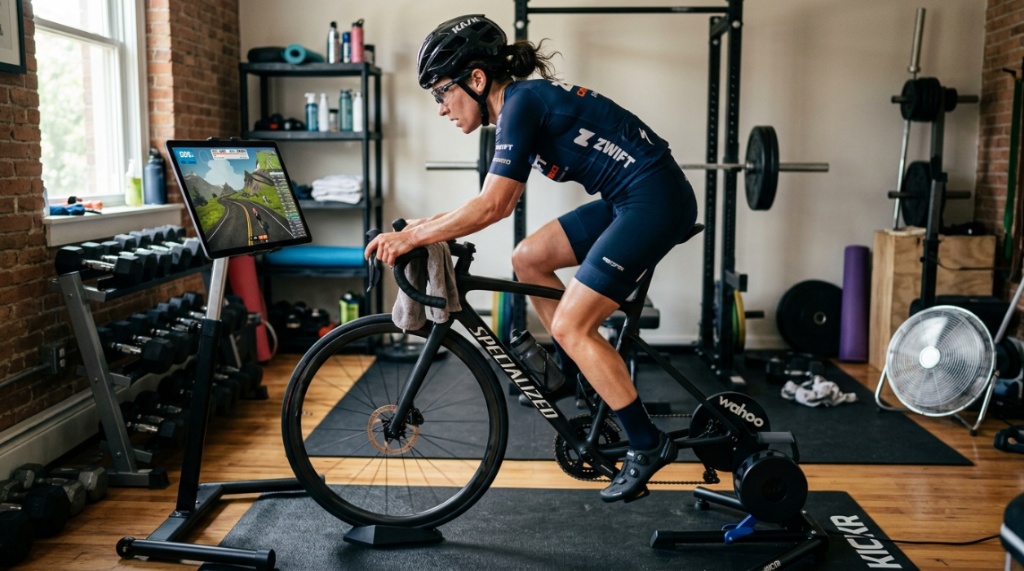
How Do You Maintain a Bike Trainer Stand for Long-Term Use?
Regular calibration, tire pressure checks (for wheel-on types), and occasional cleaning keep your trainer accurate and functional for years.
Monthly maintenance checklist:
- Calibrate through your training app (spindown calibration takes 2 minutes)
- Check quick-release or thru-axle tightness
- Inspect roller contact point for wear (wheel-on trainers)
- Wipe down frame and resistance unit — sweat is corrosive
- Verify firmware is current
- Lubricate chain more frequently (indoor riding lacks natural airflow that dries lube)
Direct-drive trainers require less maintenance since there’s no tire contact. However, the internal belt or fluid mechanism still benefits from keeping the unit clean and stored in moderate temperatures. Extreme cold or heat can affect fluid viscosity in fluid-based resistance units.
Conclusion
Choosing the best bike trainer stand comes down to matching your budget, space, noise tolerance, and training goals. Fluid trainers hit the sweet spot for most riders — quiet operation, realistic feel, and reasonable pricing. If you’re serious about structured training or virtual riding, a direct-drive smart trainer pays for itself in workout quality and motivation.
Measure your bike’s axle type before ordering. Budget for a trainer tire, mat, and fan alongside the trainer itself. Start with three sessions per week and build consistency before chasing intensity. Indoor cycling removes every excuse — weather, darkness, traffic — leaving only the decision to clip in and ride.
What’s your current indoor training setup? Drop a comment below or share which trainer type interests you most — I’ll help you narrow down the best option for your situation.
Frequently Asked Questions
Is a bike trainer stand worth it for beginners?
Yes. A bike trainer stand lets beginners build cycling fitness without traffic risks, weather limitations, or route planning. Even a basic $100–$150 magnetic trainer provides enough resistance for effective cardiovascular workouts. Start with 20–30 minute sessions and increase duration as fitness improves.
How loud is a bike trainer stand in an apartment?
Fluid and direct-drive trainers produce 60–70 decibels — similar to normal conversation. Magnetic trainers range from 65–75 decibels. Wind trainers exceed 80 decibels and are unsuitable for apartments. Adding a rubber mat reduces vibration noise transmitted through floors by approximately 50%.
Can I use my regular bike on a trainer stand?
Most road bikes, gravel bikes, and mountain bikes with quick-release or thru-axle rear wheels work on modern trainer stands. Check your wheel size (700c, 27.5″, or 26″) and axle type before purchasing. Some trainers include multiple adapters for different axle standards.
How long do bike trainer stands last?
Quality fluid and direct-drive trainers last 5–10 years with proper maintenance. Budget magnetic trainers typically last 2–4 years before resistance units degrade. Regular calibration and keeping the unit clean extend lifespan significantly.
Do I need a special tire for a wheel-on bike trainer?
A dedicated trainer tire is strongly recommended. Regular road tires wear rapidly on trainer rollers — often within 2–3 months of consistent use. Trainer-specific tires ($25–$40) use harder rubber compounds designed for roller contact, lasting 6–12 months and reducing noise.
What’s the difference between a smart trainer and a basic trainer?
Smart trainers measure power output, connect wirelessly to apps via Bluetooth/ANT+, and automatically adjust resistance during structured workouts (ERG mode). Basic trainers provide resistance without data transmission — you manually control difficulty and need separate sensors for any metrics.
Can a bike trainer stand damage my bike frame?
Properly installed trainer stands don’t damage frames. However, excessive clamping force on quick-release skewers or using incompatible adapters can stress dropouts. Always use the trainer-supplied skewer, follow torque specifications, and inspect your frame’s rear dropout periodically for stress marks.