Starting a reef aquarium is exciting. Watching corals grow and marine fish thrive inside your home can feel like maintaining a small piece of the ocean. But here is the reality many beginners discover too late: reef tanks are sensitive ecosystems. Without the right equipment, water quality drops, algae spreads, and corals struggle to survive.
This is why choosing the correct reef aquarium equipment is critical from day one. Tools such as a protein skimmer, proper reef tank lighting, and reliable aquarium filtration are not optional upgrades—they are core systems that stabilize water chemistry and support coral health.
According to a 2023 hobbyist survey by Reef Builders, nearly 63% of reef tank failures in the first year were linked to inadequate filtration and lighting. Most of these failures occurred in beginner setups that tried to save money on essential equipment.
The good news is that reef keeping becomes much easier when you start with the right tools. This guide explains the essential reef aquarium equipment every beginner needs, why each piece matters, and how they work together to maintain stable water parameters. By the end, you’ll understand exactly how to build a reliable reef system that supports healthy fish and thriving corals.
What Is the Essential Reef Aquarium Equipment for Beginners?
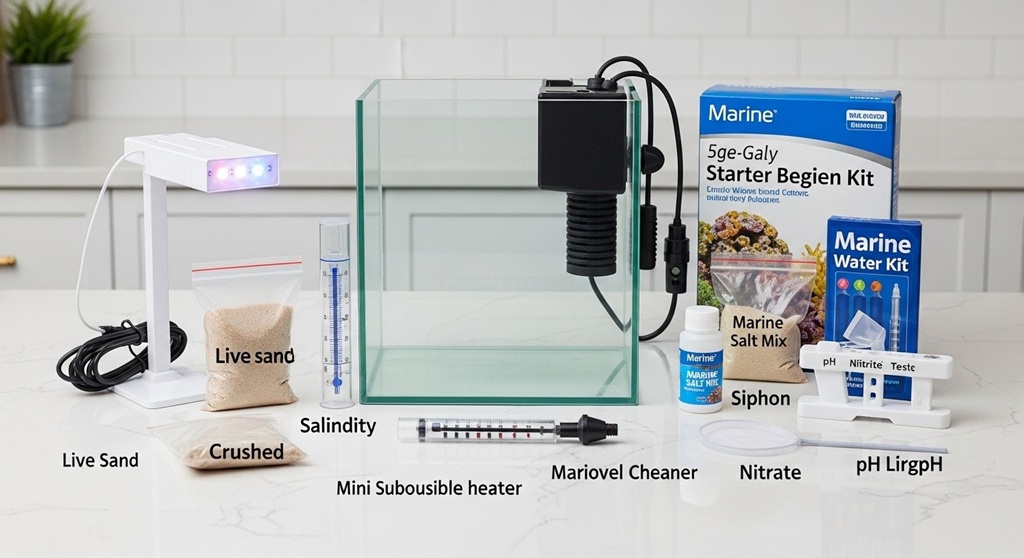
The essential reef aquarium equipment includes a protein skimmer, reef tank lighting system, aquarium filtration, circulation pumps, heater, live rock, and monitoring tools.
Each component supports a specific function in maintaining water quality and coral growth. Reef aquariums differ from freshwater tanks because corals rely on stable lighting, nutrient control, and strong water movement.
Here is a quick overview of the core equipment:
| Equipment | Primary Function |
|---|---|
| Protein Skimmer | Removes dissolved organic waste before it breaks down |
| Reef Tank Lighting | Provides energy for coral photosynthesis |
| Aquarium Filtration | Maintains water clarity and biological balance |
| Powerheads / Circulation Pumps | Creates water movement similar to ocean currents |
| Aquarium Heater | Keeps temperature stable for marine life |
| Live Rock | Hosts beneficial bacteria for biological filtration |
| Testing Kits | Monitors water chemistry and reef stability |
Skipping any of these systems often leads to nutrient buildup, coral stress, or algae outbreaks.
Why Is a Protein Skimmer Important in a Reef Aquarium?
A protein skimmer removes dissolved organic compounds from aquarium water before they decompose into harmful ammonia and nitrates.
Fish waste, uneaten food, and decaying matter release organic molecules into the water. If left untreated, these compounds break down and increase nutrient levels. High nutrients fuel algae growth and harm coral health.
A protein skimmer solves this problem through foam fractionation. The device injects tiny air bubbles into a chamber. Organic waste attaches to the bubbles and rises into a collection cup where it can be removed.
Benefits of Using a Protein Skimmer
- Reduces nitrate and phosphate buildup
- Improves oxygen levels in the aquarium
- Helps maintain stable water chemistry
- Reduces algae outbreaks
- Improves water clarity
A case study shared by Reef2Reef forums compared two identical 75-gallon reef tanks. The tank with a protein skimmer maintained nitrate levels below 5 ppm, while the tank without one exceeded 25 ppm within three months.
This demonstrates why most experienced reef keepers consider a skimmer essential even for beginner systems.
What Type of Reef Tank Lighting Do Corals Need?
Corals require high-quality reef tank lighting that provides the correct spectrum and intensity for photosynthesis.
Most corals host microscopic algae called zooxanthellae. These algae perform photosynthesis and provide energy to the coral. Without proper lighting, corals cannot grow or maintain their color.
Common Reef Tank Lighting Options
- LED reef lighting systems
- T5 fluorescent lighting
- Metal halide lighting
Among these options, LED reef lighting has become the most popular choice for beginners because it offers:
- Lower energy consumption
- Adjustable light spectrum
- Longer lifespan
- Programmable sunrise and sunset cycles
Research from Bulk Reef Supply showed that corals grown under optimized LED lighting displayed up to 30% faster growth rates compared with poorly tuned lighting setups.
Lighting intensity is measured as PAR (Photosynthetically Active Radiation). Different corals require different PAR ranges:
| Coral Type | Recommended PAR Range |
|---|---|
| Soft Corals | 50–100 PAR |
| LPS Corals | 75–150 PAR |
| SPS Corals | 200–350 PAR |
Matching lighting levels to coral species is essential for long-term reef success.
How Does Aquarium Filtration Work in a Reef Tank?
Aquarium filtration removes waste, maintains beneficial bacteria, and stabilizes water chemistry in reef systems.
Reef aquariums rely on three filtration types:
- Mechanical filtration
- Biological filtration
- Chemical filtration
Mechanical Filtration
Mechanical filters remove visible debris from the water. Filter socks, sponges, and filter pads capture particles before they break down.
Biological Filtration
Beneficial bacteria convert toxic ammonia into nitrite and then nitrate. Live rock and biological media provide surface area for these bacteria to grow.
Chemical Filtration
Chemical filtration removes dissolved pollutants using media such as activated carbon or phosphate removers.
When combined with a protein skimmer, strong aquarium filtration keeps nutrient levels under control and stabilizes reef ecosystems.
Why Is Water Flow Important in Reef Aquariums?
Water circulation pumps simulate ocean currents, delivering oxygen and nutrients to corals.
In natural reefs, waves constantly move water across coral colonies. This movement removes waste and supplies oxygen.
Without adequate flow:
- Coral tissues accumulate waste
- Algae grows in stagnant areas
- Oxygen levels drop
Most reef tanks aim for 20–40 times tank volume turnover per hour. For example, a 50-gallon reef tank should circulate between 1,000 and 2,000 gallons per hour.
Powerheads or wavemakers create this circulation and prevent dead spots inside the aquarium.
What Temperature Control Equipment Is Needed for Reef Tanks?
A reliable aquarium heater maintains stable temperatures between 24°C and 26°C (75°F–79°F), which is ideal for most coral species.
Marine organisms are sensitive to temperature swings. Sudden changes can stress fish and cause coral bleaching.
Essential Temperature Equipment
- Digital aquarium heater
- Thermometer
- Optional temperature controller
Many reef hobbyists install two smaller heaters instead of one large heater. If one fails, the second heater prevents temperature crashes.
Why Is Live Rock Important in Reef Aquarium Filtration?
Live rock acts as natural biological filtration by hosting beneficial bacteria that process waste.
These porous rocks contain tiny cavities where nitrifying bacteria grow. These bacteria perform the nitrogen cycle that converts toxic ammonia into safer compounds.
Live rock also provides:
- Natural habitat for marine life
- Surface area for beneficial microorganisms
- Improved reef aesthetics
Most reef aquariums use approximately 1–1.5 pounds of live rock per gallon of water.
Which Water Testing Tools Do Beginners Need?
Water testing kits monitor reef chemistry and prevent dangerous parameter swings.
Important reef tank parameters include:
- Salinity
- pH
- Ammonia
- Nitrate
- Phosphate
- Calcium
- Alkalinity
- Magnesium
Regular testing allows aquarists to detect problems early before they affect corals or fish.
Many experienced reef keepers follow a weekly testing schedule to maintain stable reef conditions.
How Much Does Essential Reef Aquarium Equipment Cost?
A beginner reef aquarium setup typically costs between $800 and $2,500 depending on tank size and equipment quality.
| Equipment | Average Cost |
|---|---|
| Protein Skimmer | $120–$400 |
| Reef Tank Lighting | $150–$700 |
| Aquarium Filtration System | $80–$300 |
| Powerheads | $60–$250 |
| Heater | $30–$80 |
| Live Rock | $100–$400 |
Although this investment may seem high, quality equipment reduces long-term maintenance problems and livestock loss.
Conclusion: What Is the Best Way to Start a Reef Aquarium Successfully?
Reef aquariums succeed when the system is stable. Stability comes from using the right equipment and maintaining consistent water conditions.
For beginners, the most important tools include a reliable protein skimmer, high-quality reef tank lighting, and strong aquarium filtration. These systems control nutrients, support coral growth, and maintain healthy water chemistry.
Combine them with proper water circulation, temperature control, and regular testing. Together they create a balanced ecosystem that mirrors natural reef environments.
If you are planning your first reef tank, start by building a checklist of essential equipment and invest in reliable gear rather than temporary solutions.
Ready to build your first reef aquarium? Start researching equipment, plan your tank layout, and join reef-keeping communities to learn from experienced hobbyists. The sooner you set up the right system, the sooner you can enjoy a thriving reef ecosystem in your own home.
FAQ: Essential Reef Aquarium Equipment for Beginners
Do beginners really need a protein skimmer?
Yes. A protein skimmer removes organic waste before it breaks down into harmful nutrients. It significantly improves water quality and reduces algae growth in reef aquariums.
What is the best reef tank lighting for beginners?
LED reef lighting is the most beginner-friendly option. It offers adjustable spectrum, lower energy use, and programmable light cycles that mimic natural sunlight.
How strong should water flow be in a reef aquarium?
Most reef tanks require water circulation between 20 and 40 times the tank volume per hour. Strong flow helps deliver oxygen and nutrients to corals.
Is aquarium filtration enough without live rock?
No. Live rock provides biological filtration by hosting beneficial bacteria that convert ammonia into less harmful compounds. It is a key part of reef tank stability.
How often should reef tank water be tested?
Beginners should test water parameters weekly. Testing helps monitor ammonia, nitrate, alkalinity, and other parameters critical for coral health.
Can beginners keep corals in a small reef tank?
Yes, but stability becomes more challenging in smaller tanks. Nano reef tanks require precise equipment, strong filtration, and careful monitoring.
What is the most common mistake new reef keepers make?
The most common mistake is underestimating the importance of proper filtration and lighting. Poor equipment often leads to unstable water parameters and coral loss.
Read More Also: How to Choose Age-Appropriate Toys for Toddlers
Find out: How to Choose the Right Recovery Rope for 4×4 Vehicles