
Moving into a dorm room or a first apartment usually means discovering that your bed is not the size you grew up with—and that every inch of storage counts. Before you buy sheets, a comforter, or a mattress topper, it helps to know what you are actually working with. Knowing the dimensions of a standard pillow, for example, tells you whether your pillowcase will fit properly or slide around all night. This guide covers the practical bedding decisions students face in small spaces: sizing, layering, storage, and laundry.
Quick Answer
Most dorm beds are Twin XL (about 38 x 80 inches), so buy Twin XL sheets, not standard Twin. For apartments, confirm your mattress size before purchasing anything. Stick to a simple three-layer system—mattress protector, fitted sheet, and one comforter or quilt—plus two pillows with pillowcases. Wash sheets weekly, use a mattress protector to guard against spills, and choose bedding that stores flat under the bed or in a single bin.
Key Takeaways
- Twin XL is the standard dorm mattress size; standard Twin sheets will be too short and will pull off the corners.
- A standard pillow is roughly 20 x 26 inches, which fits most queen and standard pillowcases sold in stores.
- One good mattress protector matters more than an expensive comforter in shared or rental housing.
- Bedding that washes easily and stores flat solves most small-space problems.
- Measure your mattress before buying anything—dorm and apartment sizes vary more than people expect.
Know Your Actual Bed Size Before You Buy
Guessing your mattress size is the single most common bedding mistake students make. Dorm beds are usually Twin XL, which is five inches longer than a standard Twin but the same width. That extra length matters: a standard Twin fitted sheet will fit across but not lengthwise, so the corners pop off every night.
Apartment bedrooms are less predictable. A room might have a Full, a Queen, or even a hand-me-down Twin. Measure the mattress yourself with a tape measure rather than trusting a label or a roommate’s memory. Write down the length and width in inches before you shop.
Common Bed Sizes You Will Encounter
| Size | Approximate Dimensions | Where You Will See It |
|---|---|---|
| Twin | 38 x 75 inches | Older homes, bunk beds, some guest rooms |
| Twin XL | 38 x 80 inches | Most dorm rooms |
| Full | 54 x 75 inches | Small apartments, first off-campus rentals |
| Queen | 60 x 80 inches | Larger apartments, shared leases |
These are approximate because mattress brands vary slightly. Always check the specific mattress in front of you.
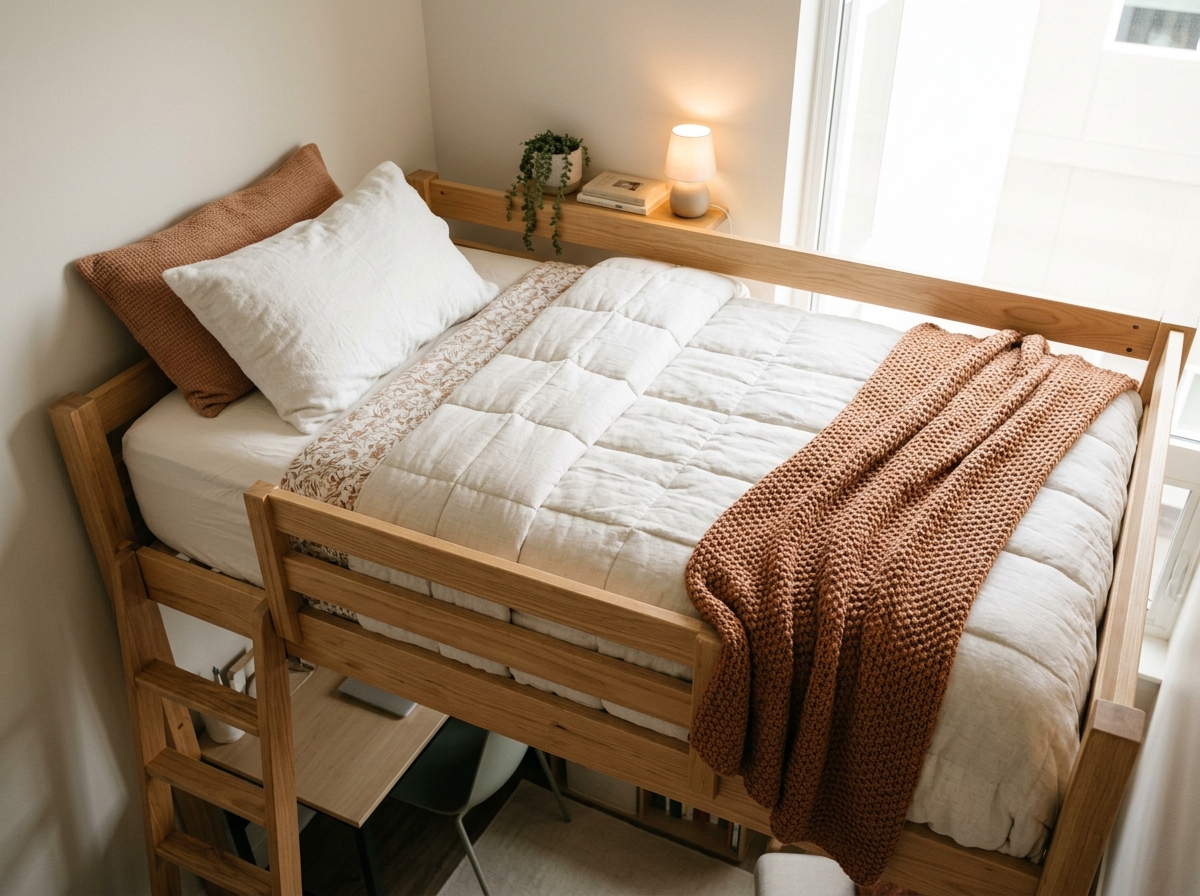
The Pillow Problem Nobody Warns You About
Pillows are where sizing gets quietly confusing. Pillowcases are sold by size, but the terms do not always match what you expect. A pillow labeled “standard” is generally around 20 x 26 inches, while a queen pillow is longer, often around 20 x 30 inches. If you buy a queen pillowcase for a standard pillow, the extra fabric bunches at the open end and the pillow shifts around.
For dorm life, two standard pillows usually work better than one oversized pillow. They are cheaper, easier to wash, fit standard pillowcases, and can double as back support when you are studying on the bed. If you sleep on your side, a slightly firmer pillow helps keep your neck aligned; back sleepers generally do better with a flatter one.
Matching Pillows to Pillowcases
- Standard pillow (about 20 x 26 inches): fits standard pillowcases, the most common and affordable option.
- Queen pillow (about 20 x 30 inches): needs queen pillowcases to avoid bunching.
- King pillow: only worth it if you have a wide bed and want a fuller look.
When in doubt, measure your pillow before buying a case. It takes ten seconds and prevents a recurring annoyance.
Build a Bedding System, Not a Bedding Collection
Small rooms punish excess. A layered system that covers the essentials works better than a pile of decorative extras you have nowhere to store. For most students, three layers handle everything:
- Mattress protector. This is the layer that protects the mattress from spills, sweat, and stains. In dorm and rental housing, you may be charged for damage, so a washable protector pays for itself.
- Fitted sheet. Buy two if you can. Having a spare means you can strip the bed, wash, and remake it without waiting on laundry.
- Comforter or quilt. One is enough. Choose something machine washable and light enough to layer with a blanket in winter.
Skip the decorative pillow collection and the bed skirt if space is tight. Both add storage problems without improving sleep.
Why Fabric Choice Matters More Than Thread Count
Thread count is heavily marketed and often misleading. What actually affects comfort is the fiber and weave. Cotton percale feels crisp and breathable, which suits warm dorm rooms. Cotton sateen feels smoother and slightly heavier. Microfiber is inexpensive, dries fast, and resists wrinkles, which makes it practical for shared laundry rooms where you cannot babysit the dryer.
If you run hot at night, breathable cotton or a linen blend will serve you better than a high-thread-count synthetic sheet that traps heat.
Storage and Laundry Tactics for Tiny Rooms
In a dorm, your bed is often your only storage. Two habits make a real difference:
- Use under-bed bins. Flat bins fit under most raised dorm beds and hold extra sheets, a spare blanket, and off-season clothing.
- Keep one laundry system. A single pop-up hamper or a mesh bag that clips to the bed frame prevents clothes from spreading across the floor.
Laundry scheduling matters too. Shared machines are busiest on weekend evenings, so washing sheets on a weekday morning is usually faster. Wash sheets every one to two weeks, and wash your pillowcase more often if you have oily skin or allergies. A mattress protector only needs washing every month or two unless something spills.
A Quick Rotation That Saves Time
Keep two sets of sheets. When one is dirty, put the clean set on immediately and carry the dirty set to the laundry. You never have to wait for a wash cycle to have a made bed, which matters when you are tired after class.
What to Skip When Space and Budget Are Tight
Some bedding products are marketed hard to students but rarely earn their place in a small room:
- Bed skirts. They hide storage space you could actually be using.
- Multiple comforters. One washable comforter plus one throw blanket covers most climates.
- Oversized decorative pillows. They take up bed space and get tossed on the floor.
- Silk or dry-clean-only bedding. Impractical when your only laundry option is a coin machine down the hall.
The money saved here is better spent on a decent mattress protector and a second set of sheets, both of which solve real problems.
Frequently Asked Questions
Are dorm beds always Twin XL?
Most are, but not all. Older residence halls and some converted buildings may have standard Twin beds. Measure your mattress or check your housing paperwork before buying sheets.
Can I use standard Twin sheets on a Twin XL bed?
The width fits, but the length does not. Standard Twin sheets are about five inches too short, so the fitted corners will pull off. Buy Twin XL sheets instead.
How many pillows should a student have?
Two standard pillows cover most needs: one for sleeping and one for propping yourself up while reading or studying. A third is optional and mostly adds storage hassle.
Is an expensive comforter worth it for a dorm?
Usually not. A machine-washable mid-range comforter plus a throw blanket handles temperature changes better and costs less to replace if it gets stained.
How often should dorm bedding be washed?
Sheets and pillowcases every one to two weeks. Comforters every few weeks or when visibly soiled. Mattress protectors roughly monthly.
Do I need a mattress topper in a dorm?
Many dorm mattresses are firm or covered in waterproof vinyl. A thin foam or fiber topper adds comfort and is easy to roll up and store between semesters.
Conclusion
Getting bedding right in a small space comes down to three things: measure your mattress before you buy, keep your system simple, and choose items you can actually wash and store. Twin XL sheets, two standard pillows, a mattress protector, and one versatile comforter cover nearly every dorm and apartment situation. Start with those basics, add a spare sheet set, and you will spend far less time fighting your bed and more time sleeping in it.