An angle grinder is a handheld power tool used for cutting, grinding, polishing, and surface preparation across metal, stone, and wood.
Most people buy an angle grinder for a single task. Then they realize it can do far more. This is where the problem begins—underusing a tool that can replace multiple machines.
An angle grinder is one of the most versatile cutting, grinding, polishing tools available today. It works with interchangeable discs, making it a true multi-purpose tool for DIY users, fabricators, and construction professionals.
According to industry usage data, over 70% of workshop professionals rely on angle grinders for at least three different applications weekly. That alone shows how essential this tool has become.
But here’s the issue—most beginners only use it for cutting metal. They miss out on six other powerful uses that could save time, money, and effort.
This guide breaks down the 7 most common uses of an angle grinder, with practical insights so you can get maximum value from your tool.
1. Can you use an angle grinder for cutting metal and steel?
Short answer: Yes, an angle grinder with a cutting disc is ideal for slicing through steel rods, pipes, bolts, and sheet metal.
Cutting metal is the most common use of an angle grinder. It’s fast, precise, and works in tight spaces where larger tools cannot fit.
Where it works best:
- Cutting steel rods and rebars
- Trimming metal pipes
- Slicing bolts and screws
- Cutting sheet metal panels
Case insight: In a small fabrication workshop study, switching from a hacksaw to an angle grinder reduced cutting time by nearly 60% per task.
Pro tip: Use thin cutoff wheels for cleaner cuts and less heat buildup.
2. Is an angle grinder useful for grinding and smoothing surfaces?
Short answer: Yes, grinding discs allow you to smooth rough edges, remove welds, and level uneven surfaces.
Grinding is where the tool truly shows its power. After cutting, surfaces are often rough or sharp. A grinding disc can clean and smooth them quickly.
Common grinding applications:
- Smoothing welded joints
- Removing rust and corrosion
- Leveling uneven metal surfaces
- Cleaning edges after cutting
Real-world example: Automotive repair shops use angle grinders to prep metal surfaces before repainting. This improves paint adhesion and finish quality.
Pro tip: Apply light pressure. Let the disc do the work to avoid overheating.
3. Can an angle grinder be used for polishing and finishing?
Short answer: Yes, with polishing pads or flap discs, an angle grinder can deliver a smooth, shiny finish on metal and stone.
This is one of the most overlooked uses. Many people don’t realize their angle grinder can double as a polishing tool.
Best uses for polishing:
- Polishing stainless steel
- Buffing metal surfaces
- Enhancing stone finishes
- Refining edges for final output
Case study insight: In metal fabrication units, using flap discs instead of traditional sanding reduced finishing time by 30% while improving consistency.
Pro tip: Always use variable speed settings if available. High speed can damage the surface.
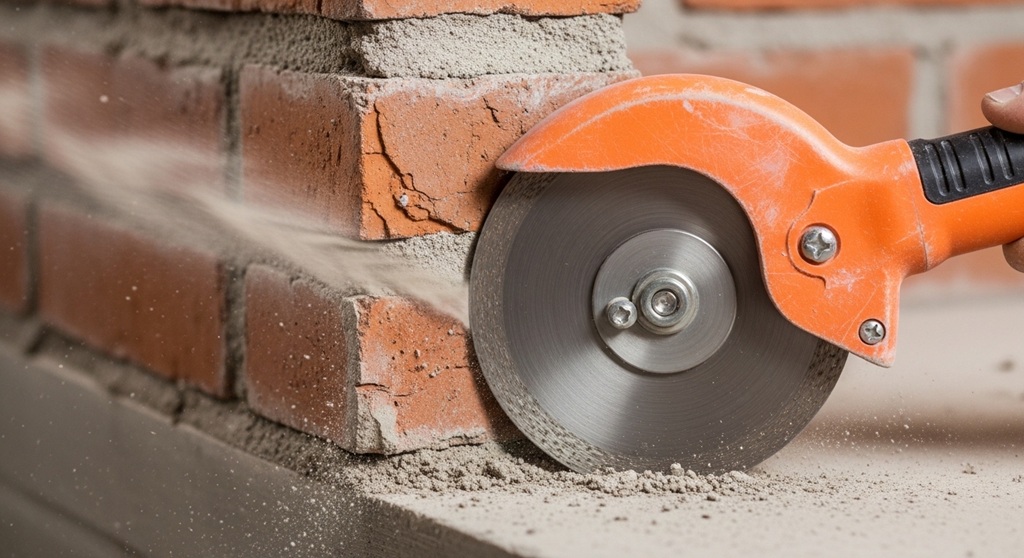
4. Can you cut tiles, stone, and concrete with an angle grinder?
Short answer: Yes, using a diamond blade, an angle grinder can cut tiles, bricks, concrete, and stone.
This makes it a go-to tool for construction and renovation work.
Where it is commonly used:
- Cutting ceramic tiles
- Shaping bricks
- Trimming concrete blocks
- Cutting paving stones
Data point: Contractors report that angle grinders increase tile cutting speed by up to 40% compared to manual tile cutters.
Pro tip: Use water or wet cutting techniques to reduce dust and heat.
5. Is an angle grinder effective for rust removal and cleaning?
Short answer: Yes, wire brushes and stripping discs make angle grinders highly effective for removing rust, paint, and debris.
Rust and old paint reduce durability and appearance. An angle grinder can restore surfaces quickly.
Cleaning applications:
- Removing rust from metal surfaces
- Stripping old paint
- Cleaning weld seams
- Surface preparation before coating
Example: In maintenance projects, using a wire brush attachment reduced manual cleaning time by over 50%.
Pro tip: Wear safety gear. Wire bristles can detach at high speed.
6. Can an angle grinder be used for sharpening tools?
Short answer: Yes, angle grinders can sharpen blades, lawn tools, and cutting equipment with precision.
This turns your grinder into a maintenance tool.
What you can sharpen:
- Garden tools (shovels, hoes)
- Axes and machetes
- Lawnmower blades
- Chisels
Insight: DIY users often replace tools unnecessarily. Regular sharpening can extend tool life by years.
Pro tip: Maintain the correct angle while sharpening to avoid damaging the blade.
7. Can an angle grinder cut and shape wood?
Short answer: Yes, with specialized wood carving discs, angle grinders can cut, carve, and shape wood.
This is less common but highly useful for creative and carpentry projects.
Woodworking uses:
- Carving designs
- Shaping wooden edges
- Removing excess material
- Rough sanding
Important note: This requires proper attachments and careful handling. Wood cutting discs are different from metal discs.
Pro tip: Always use guards and control your grip. Wood kickback can be dangerous.
How do different angle grinder attachments impact performance?
Short answer: The attachment determines the function—cutting discs cut, grinding wheels smooth, and polishing pads refine surfaces.
| Attachment Type | Primary Use | Best For |
|---|---|---|
| Cutting Disc | Cutting | Metal, pipes, sheets |
| Grinding Wheel | Grinding | Welds, edges |
| Flap Disc | Polishing | Finishing surfaces |
| Wire Brush | Cleaning | Rust, paint removal |
| Diamond Blade | Cutting | Tile, concrete |
Choosing the right accessory is what turns an angle grinder into a true multi-purpose tool.
Conclusion: Why should you maximize your angle grinder’s potential?
An angle grinder is not just a cutting tool. It is a complete solution for cutting, grinding, polishing, and cleaning tasks.
The problem is simple—most users only use 20% of its capability. That leads to wasted potential and unnecessary tool purchases.
By understanding these 7 common uses, you can:
- Save time on multiple tasks
- Reduce the need for extra tools
- Improve work efficiency
- Achieve professional-level results
Call to Action: If you already own an angle grinder, start experimenting with the right attachments today. If you don’t, consider investing in one multi-purpose tool that can handle most of your workshop needs.
Frequently Asked Questions (FAQs)
1. What materials can an angle grinder cut?
An angle grinder can cut metal, steel, tile, stone, concrete, and even wood with the right blade.
2. Is an angle grinder safe for beginners?
Yes, but only with proper safety gear and correct handling. Always use gloves, goggles, and guards.
3. Can I use one disc for all tasks?
No. Each task requires a specific disc. Using the wrong one can damage materials and be dangerous.
4. How long do angle grinder discs last?
It depends on usage and material. Cutting discs wear faster than grinding wheels under heavy use.
5. What size angle grinder is best?
4.5-inch grinders are ideal for most DIY tasks, while 7-inch or 9-inch models are better for heavy-duty work.
6. Can angle grinders replace other tools?
Yes, in many cases. They can replace saws, sanders, and polishers for various applications.
7. Do I need a variable speed angle grinder?
Not always, but it is useful for polishing and delicate tasks.
Read More Also: How to Find Affordable Cordless Power Tools Without Losing Quality
Find out: How to Select a Marine Aquarium Starter Kit for Beginners