Key Takeaways
- A salvage title means an insurer declared the car a total loss at some point.
- A clean title shows no recorded major damage, however, hidden issues can still exist.
- Salvage and rebuilt cars often sell 20 to 40 percent below clean-title prices.
- Many insurers offer only limited coverage on salvage vehicles.
- A rebuilt car can be a smart buy, but only after a strict professional inspection.
My coworker Marcus bought a rebuilt Honda Civic for $9,500 while identical clean-title cars sold for $14,000. I went along because I didn’t trust the deal—especially after reading warnings from automotive market experts like Tradecarhub about hidden structural damage. However, Marcus did everything right. He pulled the history report, hired an inspector, and photographed every weld under the car. The repair work was professional, the airbag light worked, and the frame measurements were perfect. Five years later, that Civic is still his daily driver.
Then there is the other side. A friend of a friend bought a rebuilt SUV at an auction without any inspection. Six months later, the electrical system began failing one module at a time. The savings disappeared, and then some.
Two cars, two outcomes, one difference. Preparation. Therefore, this guide explains salvage title vs clean title in plain language. You will learn what each label means, what each one costs, and how to buy a rebuilt car safely.
What Is a Clean Title?
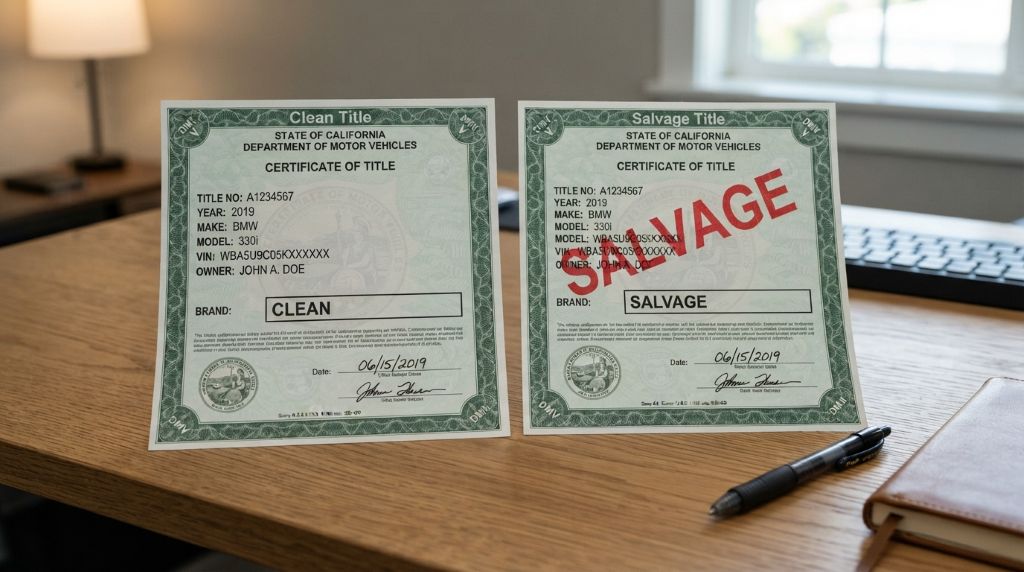
A clean title is a title without any official damage brand. The state issues it when no insurance company has declared the vehicle a total loss, and no major damage brand exists in the record. To a buyer, it suggests the car has never suffered serious harm, at least on paper.
Clean titles also carry the practical advantages buyers expect. Insurance companies offer full coverage, including comprehensive and collision. Banks and credit unions finance them normally. Additionally, resale is straightforward, because future buyers trust the label.
However, clean does not always mean perfect. Some accidents never involve insurance claims. Cash repairs leave no paper trail, so the title stays clean while the damage stays hidden. Therefore, a clean title is a strong starting point, not a guarantee. The federal NMVTIS database at vehiclehistory.gov exists precisely to confirm title history across state lines, and every buyer should use it.
What Is a Salvage Title?
A salvage title is an official damage brand. It appears when an insurance company decides that repairing the car costs too much compared to its value. Most states trigger this label when damage reaches roughly 70 to 90 percent of the vehicle’s worth. The threshold varies by state, so the same crash can produce different outcomes in different places.
A salvage car cannot legally drive on public roads in its salvage state. It must first be repaired, pass a state inspection, and earn a rebuilt title. Only then can it carry passengers again.
Theft recovery is another common path to this label. According to the National Insurance Crime Bureau, more than one million vehicles were stolen in the United States in 2023. Many are recovered weeks or months later, sometimes stripped or damaged. Insurers often pay the owner before recovery, therefore, the recovered car becomes an insurance company’s property and receives a salvage brand. You can learn more at the NICB website.
Salvage Title vs Clean Title: The Key Differences
When buyers compare salvage title vs clean title, six differences matter most. Here is the honest breakdown:
- Damage history: salvage means a documented total loss; clean means none on record
- Legal status: salvage cars cannot drive until rebuilt and inspected
- Price: salvage and rebuilt cars sell far below comparable clean vehicles
- Insurance: full coverage is difficult or impossible on salvage vehicles
- Financing: most banks will not loan money on a salvage car
- Resale: rebuilt cars always sell for less, and some buyers refuse them entirely
None of these differences makes salvage cars automatically bad. They make salvage cars different. The damage already happened, therefore, the depreciation has already been paid by someone else. The buyer’s job is deciding whether the repairs were done properly.
Meanwhile, clean titles carry their own quiet risk. A clean title with a hidden flood past, like the ones that follow every hurricane season, can be worse than an honest rebuilt car. In short, the label tells you where to look, not what to decide.
How Cars Earn a Salvage Brand
Cars receive salvage titles through several doors, and each path carries its own risks. Serious collisions are the biggest source, when repair estimates climb past the state threshold. Flooding is the second major source, and flood cars deserve special caution, because water damage keeps spreading through wiring for years. Theft recovery, hail storms, fires, and vandalism fill out the list.
Title washing is the dark side of this system. Dishonest sellers move damaged cars across state lines to weaken or erase brands, because branding rules differ between states. Additionally, some rebuilders repair cars poorly, pass inspection once, and sell quickly before problems surface.
Therefore, protect yourself with paperwork before you fall for the price. Pull a history report, run the VIN through NMVTIS, and compare title states with the car’s story. A title that suddenly moved three states in one year deserves hard questions. My rule is simple. The paperwork tells the past, the inspection tells the present, and together they predict the future.
The Price Advantage: What You Can Save
Money is the reason salvage cars exist as a market. Rebuilt and salvage vehicles typically sell 20 to 40 percent below identical clean-title cars. On a $15,000 truck, that difference means $3,000 to $6,000 stays in your pocket.
Marcus’s Civic shows the math working correctly. He saved $4,500, spent $200 on an inspection, and drove a reliable car for five years. The savings were real because the repairs were real.
However, the discount exists for reasons, and smart buyers count them all. Resale value drops a second time when you eventually sell, because the rebuilt label never disappears. Insurance may cover less. Additionally, financing is scarce, so most buyers pay cash.
Therefore, the deal favors certain buyers. Handy owners who keep cars for many years capture the full benefit. Flippers and short-term owners usually lose, because resale penalties eat the discount. Match the purchase to your plans, and the math works.
Insurance and Financing: The Hidden Costs
The price tag is only the entrance fee. Insurance and financing shape the true cost of ownership, and both treat salvage vehicles differently.
Many insurance companies refuse comprehensive and collision coverage on salvage cars entirely. Others offer it at reduced value, because rebuilt vehicles are hard to price. Therefore, a rebuilt car may be insurable for liability only. Call your insurer before you buy, not after. One phone call reveals exactly what coverage exists.
Financing is stricter still. Most banks and credit unions decline salvage collateral, because they cannot easily resell a repossessed rebuilt car. A few specialty lenders participate, however, their rates run high. Therefore, plan for a cash purchase in most cases.
State rules add another layer. Some states require special photographs, inspections, or fees before a rebuilt car registers legally. Others restrict which salvage brands can return to the road at all. Consequently, check your state’s motor vehicle agency website before committing. These steps take an afternoon, and they prevent the worst outcome, which is owning a car you cannot legally drive or insure.
How to Evaluate a Rebuilt Car Safely
A rebuilt car can serve you well for years, however, only when the repairs were honest. Follow this sequence before you pay anything:
- Pull the history report and read the damage details.
- Run the VIN through NMVTIS and the free recall lookup.
- Confirm the seller’s name matches the title.
- Hire an independent mechanic for a frame and repair inspection.
- Check that the airbag light glows and then clears at startup.
- Look for even panel gaps, matched paint, and clean welds underneath.
- Drive for 20 minutes and test every electrical feature.
The mechanic inspection is the entire game, so never skip it. A lift reveals weld quality, frame straightness, and hidden rust that no driveway check can see. Professional inspections cost $150 to $250, therefore, they cost about five percent of the typical savings.
Marcus passed every step, which is why his Civic still runs. Ask the seller for repair photos and receipts as well. Honest rebuilders document everything proudly. Evasive answers about repair details are a deal breaker, because a car rebuilt in secret was usually rebuilt cheaply.
Final Thoughts
The common problems with used cars follow a pattern. Accidents, floods, odometer fraud, mechanical wear, title trouble, and electrical faults all leave evidence. Buyers who check fluids, carpets, panels, and paperwork catch nearly everything. Therefore, ten minutes of looking protects years of ownership. If you are also checking the vehicle’s climate system, car AC not cooling? Try these simple hacks first can help you identify common AC issues before they become expensive repairs.
Remember the two cars from the start. Marcus inspected everything and saved $4,500. The other buyer skipped inspection and paid twice. The difference was never luck.
Have you ever owned a rebuilt car, or avoided one just in time? Share your story in the comments below. Additionally, share this guide with a friend hunting for a used-car bargain, because the best salvage deals belong to prepared buyers.
Frequently Asked Questions
Can you insure a car with a salvage title?
Usually only for liability. Many insurers refuse full coverage on salvage and rebuilt vehicles.
How much cheaper is a salvage title car?
Typically 20 to 40 percent below comparable clean-title prices, depending on damage and rebuild quality.
What does a rebuilt title mean?
A rebuilt title means a salvage car was repaired, passed a state inspection, and returned to legal road use.
Can a salvage title be changed back to clean?
No. The brand stays on the record permanently, even after professional repairs and inspections.
Is buying a rebuilt car worth it?
Yes, for patient buyers who get a professional inspection and pay cash. It is risky for everyone else.