
Yes, the Sailnovo pasta maker earns its kitchen space for affordable, fresh homemade pasta. Its 9 thickness settings and two cutters make it unusually versatile for beginners. Current listings show ratings around 4.4 stars across thousands of customer reviews. However, manual operation, cleaning, and quality-control concerns deserve attention before buying. The Sailnovo 2-in-1 pasta maker works best for cooks who value control over automation.
Key Takeaways Before You Buy
- Best advantage: Nine thickness settings provide excellent control for different pasta styles.
- Best for: Beginners, occasional pasta makers, couples, and small households.
- Main limitation: The manual crank requires more effort than an electric pasta machine.
- Cleaning concern: You should not wash or submerge the machine in water.
- Cutting flexibility: Two cutters handle popular noodle styles without requiring extra attachments.
- Value verdict: It offers strong functionality when purchased at a budget-friendly price.
What Makes the Sailnovo Pasta Maker Different?
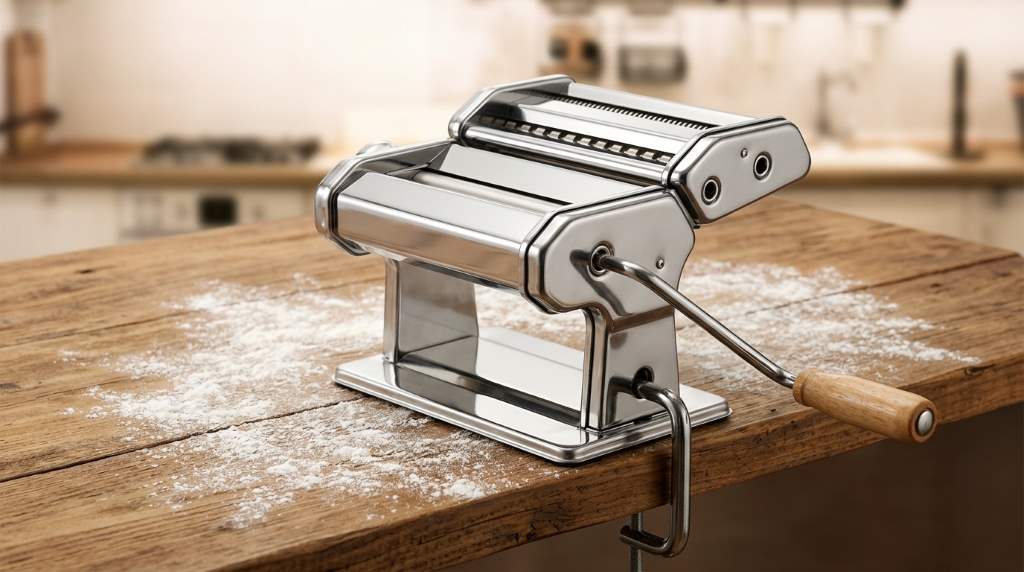
The Sailnovo stands out because it combines dough rolling and noodle cutting in one manual unit. Instead of buying separate tools, you adjust the rollers and switch to the integrated cutters. That design keeps the workflow simple while reducing the amount of equipment stored around your kitchen. The machine also uses a table clamp, which helps secure it during repeated cranking.
Its nine thickness settings form the real centerpiece of the design. Depending on the model listing, the adjustment range reaches roughly 0.3 to 3 millimeters. Therefore, you can prepare thin sheets for delicate recipes or thicker dough for sturdier dishes. That flexibility matters more than flashy features when making fresh pasta regularly.
The machine also appeals to cooks who dislike complicated appliances. There is no motor, digital control panel, or electronic program to learn. Instead, you control the dough speed, pressure, and thickness manually. As a result, the machine feels closer to traditional pasta preparation than automated alternatives.
Build Quality, Counter Space, and Everyday Setup
Build quality matters because pasta dough creates considerable resistance during rolling. The Sailnovo uses aluminum and stainless-steel components, while its included clamp attaches directly to the countertop. The commonly listed model weighs about 5.5 pounds, giving it enough heft without becoming difficult to move.
Before buying, consider where you will actually use and store it. A compact pasta machine can still become annoying when it lacks a dedicated storage location. Fortunately, its relatively small footprint suits kitchens where budget mixer home cooks already prioritize practical countertop equipment.
The clamp deserves particular attention during setup. A secure countertop produces smoother rolling and prevents unnecessary movement. However, slick or unsuitable surfaces can reduce stability, especially when working with dense dough. Therefore, test the clamp before preparing a large batch.
Storage also influences whether this machine deserves permanent counter space. If you make pasta once every few months, storing it inside a cabinet makes more sense. Conversely, frequent pasta makers may appreciate leaving it accessible for spontaneous cooking sessions.
How Well Does the 2-in-1 Design Actually Work?
The 2-in-1 concept sounds convenient, but its usefulness depends on how you cook. You first roll the dough through adjustable rollers before cutting the finished sheet. Then, you move the prepared dough through the appropriate cutter for noodles. This simple sequence reduces tool changes and keeps the pasta-making process organized.
The available cutters target common pasta shapes rather than endless specialty options. Listings commonly identify spaghetti and fettuccine-style cutting capabilities. Meanwhile, the rolling function handles sheets suitable for lasagna and similar preparations.
That limitation actually makes sense for a budget machine. Most home cooks repeatedly prepare a small group of familiar pasta styles. Therefore, paying extra for numerous specialty cutters may offer little practical value.
For kitchen organization, fewer accessories can also create a meaningful advantage. You avoid storing multiple attachments that only see occasional use. If you want your cooking area to kitchen look new, reducing rarely used equipment helps maintain visual simplicity.
Real-World Pasta Performance: Where It Shines
The Sailnovo performs best when you start with properly prepared dough. Firm, well-kneaded dough passes through the rollers more cleanly and maintains its structure. Conversely, overly wet dough can stick and create frustrating interruptions. The manufacturer guidance recommends flouring the dough appropriately when sticking occurs.
Thickness control also requires patience during the first few attempts. Start with the widest setting before gradually moving toward thinner positions. Folding the dough between early passes helps develop smoother, more uniform sheets. This technique also reduces tearing when you eventually reach thinner settings.
Once the dough reaches the desired thickness, cutting becomes comparatively straightforward. The integrated cutters produce consistent strands when the dough has the correct firmness. However, dusting freshly cut noodles with flour helps prevent them from clumping together.
Customer feedback generally supports the machine’s value proposition. Current marketplace listings show strong overall ratings, with many owners praising ease of use and consistent results. Nevertheless, some users report mechanical problems after several uses, so durability remains the biggest uncertainty.
What I Like Most About the Sailnovo
- Nine thickness settings: You get useful control for pasta sheets, noodles, and dumpling-style dough.
- Two-in-one functionality: Rolling and cutting happen through one compact countertop appliance.
- Manual control: You decide the rolling pace rather than relying on an electric motor.
- Accessible learning curve: Basic operation requires little technical knowledge or complicated setup.
- Compact storage: The machine occupies less space than a larger electric pasta system.
- Broad usefulness: You can make spaghetti, fettuccine, lasagna sheets, and other rolled dough.
Another advantage involves the tactile control of manual pasta making. You can slow the crank whenever the dough feels uneven or resistant. That feedback helps beginners understand how dough hydration affects the final texture. Over time, the machine becomes easier because your hands learn the correct pace.
Where the Sailnovo Falls Short
No honest Sailnovo pasta maker review should ignore its limitations. First, the manual crank demands physical effort during larger batches. Making dinner for several people can become tiring when you repeatedly roll and cut multiple dough portions.
Second, cleaning requires more care than many modern kitchen appliances. The machine is not dishwasher safe, and guidance warns against washing it with water. Instead, allow leftover dough to dry and remove it using a brush or suitable dry tool.
Third, quality control appears less consistent than the strongest premium alternatives. Some owners report rust, loose handles, or mechanical issues after limited use. Other owners describe the machine as sturdy and reliable, creating a mixed durability picture.
Finally, the cutter selection remains relatively narrow. You get practical everyday options rather than a comprehensive collection of pasta shapes. Therefore, serious pasta hobbyists may eventually want a more expandable system.
How to Get Better Results From Your First Batch
1. Prepare Firmer Dough
Start with dough that feels smooth and firm rather than wet or sticky. A softer dough may cling to the rollers and complicate cutting. Therefore, adjust flour gradually until the dough becomes manageable without becoming dry.
2. Begin at the Widest Setting
Always start thick before moving toward thinner settings. Pass the dough through the widest position several times when necessary. Then, reduce thickness gradually instead of skipping multiple settings.
3. Flour Strategically
Use enough flour to prevent sticking, but avoid covering the dough excessively. Too much loose flour can affect sauce adhesion and create unnecessary kitchen mess. Instead, apply a light, even dusting whenever the dough starts feeling tacky.
4. Keep the Clamp Secure
Check the clamp before every serious pasta session. A loose machine can create uneven sheets and make cranking unnecessarily difficult. If the counter surface feels slippery, improve the contact before continuing.
5. Let Fresh Noodles Separate
Freshly cut noodles can stick together when they remain moist. Dust them lightly and separate the strands immediately after cutting. This small step prevents one large noodle mass from forming.
6. Clean Without Water
Never treat the Sailnovo like a dishwasher-safe kitchen appliance. Follow dry-cleaning guidance and remove dough residue carefully from the rollers and cutters. Proper storage also helps reduce moisture-related rust concerns.
Is the Sailnovo Worth the Kitchen Space?
For the right cook, yes, but the answer depends heavily on pasta frequency. Someone making fresh pasta every weekend can easily justify keeping this machine nearby. Someone making pasta once annually may prefer borrowing or manually rolling dough instead.
The machine earns extra points when countertop space remains limited. Its manual design avoids the bulk associated with many electric appliances. Furthermore, the combined rolling and cutting functions reduce the number of separate tools required.
However, buyers should separate affordability from long-term durability. A low purchase price becomes less attractive if mechanical problems appear quickly. Therefore, inspect the machine when it arrives and keep your return options available during the initial testing period.
Storage deserves equal consideration because unused appliances quietly become kitchen clutter. If your cabinets already feel crowded, choose a dedicated location before ordering. Practical clutter-free kitchen storage can make the difference between useful equipment and forgotten equipment.
Sailnovo vs. Buying a More Expensive Pasta Machine
Premium pasta machines generally offer stronger materials, smoother mechanisms, and broader accessory ecosystems. However, those advantages matter most to frequent users who notice mechanical refinement. Casual home cooks may gain little from paying substantially more.
The Sailnovo makes a compelling case when your priorities involve simplicity and value. It delivers adjustable thickness control without adding electronic complexity. Moreover, manual operation means you can start making pasta without learning another appliance interface.
Still, serious enthusiasts should think beyond the initial purchase. Frequent batch cooking places greater demands on gears, rollers, clamps, and cutters. In that situation, spending more on proven construction may provide better long-term value.
Who Should Buy the Sailnovo?
The Sailnovo suits beginners who want fresh pasta without investing heavily in specialized equipment. It also works well for cooks who enjoy hands-on preparation and occasional weekend projects. Its compact design further benefits households with limited countertop space.
Families can also enjoy the manual format because several people can participate in preparation. One person can feed dough while another turns the crank or prepares ingredients. Consequently, pasta night becomes an activity rather than merely another cooking task.
On the other hand, people who dislike repetitive hand cranking should consider an electric alternative. Large households may also outgrow the machine when producing substantial batches. Likewise, serious pasta enthusiasts may eventually want more cutters and stronger construction.
Who Should Skip It?
Skip the Sailnovo if you want fully automated pasta production. This machine requires your hands throughout the rolling and cutting process. It cannot knead dough, mix ingredients, or produce pasta independently.
You should also reconsider it if you demand dishwasher-safe cleanup. The cleaning restrictions require deliberate dry maintenance after every use. Therefore, convenience-focused cooks may find the maintenance routine frustrating.
Finally, buyers seeking premium durability should compare higher-end alternatives before committing. Current owner reports contain enough quality-control complaints to justify careful consideration. The machine offers strong value, but it does not eliminate the compromises associated with budget equipment.
Final Verdict: Is the Sailnovo Pasta Maker Worth It?
The Sailnovo pasta maker is worth the space when you want affordable, hands-on fresh pasta preparation. Its nine thickness settings, integrated cutters, and compact footprint create a strong everyday combination. Meanwhile, the manual design keeps operation simple and avoids unnecessary electronic features.
However, its weaknesses deserve equal weight before purchasing. Cleaning requires dry maintenance, the crank demands effort, and owner reports reveal inconsistent durability. Therefore, this machine earns a recommendation for value-focused home cooks rather than demanding pasta professionals.
If you regularly crave homemade noodles but hesitate because of cost or countertop space, the Sailnovo makes sense. Start with small batches, learn the dough consistency, and use every thickness setting strategically. If those tradeoffs fit your cooking style, the Sailnovo is a practical machine worth adding to your kitchen.
Frequently Asked Questions
Is the Sailnovo pasta maker good for beginners?
Yes, its manual controls and nine thickness settings make it approachable for beginners after a few practice batches.
Can the Sailnovo pasta maker make spaghetti?
Yes, its integrated cutter can produce spaghetti-style noodles from properly prepared pasta sheets.
Is the Sailnovo pasta maker dishwasher safe?
No, the machine should not go into a dishwasher or become submerged in water.
How many thickness settings does the Sailnovo pasta maker have?
Most current listings describe nine adjustable thickness settings, although exact ranges vary slightly between models.
Is the Sailnovo better than an electric pasta maker?
It is better for cooks who prefer affordability and manual control, while electric models suit convenience-focused users.