Skateboarding is a mix of balance, control, creativity, and perseverance. Whether you’re just stepping on the board or aiming to perfect technical tricks, there’s always room for improvement. It’s not just about performing cool moves but also about mastering control, building confidence, and developing a unique style.
For those who want to learn how to get better at skateboarding, this guide provides ten essential tips that will elevate your skills. But first, let’s talk about one of the foundational moves that can boost your progress—the skateboard boneless. This trick helps build confidence in foot placement and body coordination, setting a strong foundation for more advanced moves.
Now, let’s dive into the best ways to level up your skateboarding game.
Master the Basics First
Before attempting complex tricks, ensure you have a strong foundation in the basics. This means mastering pushing, stopping, turning, and balancing effectively. Here’s how you can do it:
- Practice standing on the board without rolling to get comfortable.
- Learn to push properly—use your back foot while keeping your front foot stable.
- Perfect your stopping technique, whether using the foot-drag or tail-drag method.
- Get comfortable with carving (gentle turns) and tic-tacs (small movements to generate momentum).
Without these essential skills, advanced tricks will be harder to learn.
Choose the Right Skateboard
Your skateboard plays a huge role in your performance. If you’re a beginner, using the wrong board can slow your progress.
Here’s what to look for:
- Deck size: Choose a board width between 7.5” to 8.5” based on your foot size and comfort.
- Trucks: They should match the deck width for better control.
- Wheels: Softer wheels (78a-90a) are best for cruising, while harder wheels (95a-101a) are great for tricks.
- Bearings: Quality bearings (rated ABEC 5 or higher) will help with smoother rides.
Skateboards aren’t one-size-fits-all, so experiment with different setups to find what suits your style.
Improve Your Balance and Stance
Balance is the key to everything in skateboarding. If you struggle with stability, consider these exercises:
- Use a balance board or a Bosu ball to strengthen your stance.
- Practice standing on one foot for at least 30 seconds to improve coordination.
- Do skateboard drills on grass or carpet to get comfortable with foot positioning.
- Adjust your stance (regular vs. goofy) to see which feels more natural.
A good stance and balance will prevent unnecessary falls and help you execute tricks with confidence.
Perfect Your Pushing Technique
Pushing correctly can make a huge difference in how smooth and controlled your ride feels.
Here’s what to keep in mind:
- Bend your front knee slightly to maintain stability.
- Keep your pushing foot low to the ground—don’t stomp.
- Avoid mongo pushing (using your front foot to push), as it disrupts control.
- Push with confidence—short, controlled pushes are better than long, unstable ones.
Skaters who master proper pushing technique find skateboarding much easier and more enjoyable in the long run.
Learn to Ollie Before Anything Else
The ollie is the gateway trick to almost everything in skateboarding. Without a solid ollie, advanced tricks like kickflips or heelflips become harder to execute.
- Pop the tail hard with your back foot while sliding your front foot up.
- Jump straight up and suck your knees in to level the board.
- Land with both feet at the same time to avoid losing balance.
- Start stationary, then practice while moving to develop consistency.
Skaters who spend time perfecting their ollies progress faster with other tricks.
Practice Every Day (Even for 10 Minutes)
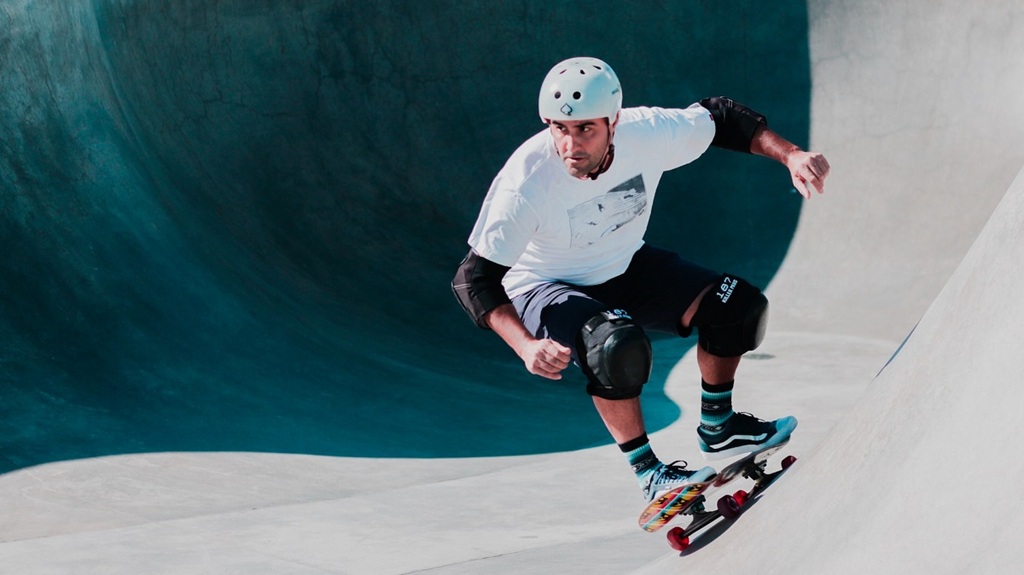
Consistency is everything in skateboarding. Even if you only have 10-15 minutes a day, skating regularly will improve muscle memory and board control.
- Skate different surfaces (smooth concrete, rough pavement) to adapt.
- Dedicate specific days for different skills (flat ground tricks, transitions, ledge tricks).
- Record yourself to analyze mistakes and refine techniques.
- Try new things—switch stance skating and manuals to improve the board feel.
The more often you skate, the more natural the tricks will feel.
Related: Do Longboards Have a Weight Limit?
Conquer Your Fear of Falling
Falling is part of skateboarding, but learning how to fall properly can prevent serious injuries.
- Bend your knees to absorb impact.
- Try to roll instead of slamming down to disperse force.
- Use your hands as little as possible to avoid wrist injuries.
- Wear protective gear (helmet, knee pads, wrist guards)—even pros do!
Once you stop fearing falls, you’ll have the confidence to commit fully to tricks.
Skate with Friends and Better Skaters
Skating alone is great, but skating with more experienced skaters will push you to improve faster.
- Watch and learn—observe their tricks and foot positioning.
- Ask for advice—most skaters are happy to help beginners.
- Challenge yourself—try to match their tricks and speed.
- Join local skateparks or online skate communities for motivation.
Skating with others keeps you accountable and makes the learning process much more fun.
Focus on Progress, Not Perfection
Skateboarding is a journey, and progress comes in small steps. Avoid getting frustrated if you don’t land a trick right away.
- Break tricks into smaller parts—work on each step separately.
- Celebrate small wins—even improving foot placement is progress.
- Take breaks—skating while frustrated leads to sloppy execution.
- Keep it fun—the best skaters are the ones who enjoy the process.
Progress will come as long as you stay consistent and challenge yourself.
Use Skateboarding Videos for Inspiration
Watching pro skaters and skateboarding tutorials can help with motivation and technique.
- Slow down footage to study tricks frame by frame.
- Find tutorial videos that explain mechanics in detail.
- Try replicating styles—develop your own flow.
- Watch skate competitions (X Games, Street League, Olympics) to learn from the best.
Visual learning can unlock new techniques and help you refine your approach.
FAQs
How long does it take to get good at skateboarding?
It depends on how often you practice. If you skate 3-5 times a week, you can develop solid basics within a few months. Advanced tricks may take years to master.
Is skateboarding a good workout?
Yes! Skateboarding improves leg strength, core stability, and cardiovascular endurance while burning 300-500 calories per hour.
What’s the hardest trick to learn?
Many skaters find tre flips (360 flip), hardflips, and laser flips to be among the hardest tricks due to the complex footwork involved.
Can adults learn skateboarding?
Absolutely! Skateboarding is for all ages. Adults may take longer to progress but can still learn balance, basic tricks, and street skating with practice.
What should I wear when skateboarding?
Wear flat-soled skate shoes, comfortable clothes, and safety gear (helmet, knee pads, elbow pads). Avoid loose or overly tight clothing that restricts movement.
Conclusion
Skateboarding is a mix of skill, patience, and creativity. If you want to get better at skateboarding, focus on fundamentals, balance, daily practice, and overcoming fear.
Most importantly, have fun! The best skaters are the ones who never stop pushing themselves while enjoying the ride.
Ready to take your skills to the next level? Grab your board, hit the pavement, and start practicing today!