A bad night of sleep can ruin a great hiking trip. Your legs feel heavy. Your focus fades. Even the most beautiful trail feels like a chore when you are exhausted. The pillow you choose plays a bigger role in trail sleep quality than most hikers expect. However, many backpackers either skip a pillow entirely or bring one that takes up too much space and weight. Neither option is ideal.
This guide walks you through everything you need to know to choose the right pillow for backpacking. You will learn what features matter most, which trade-offs are worth making, and how to find a pillow that fits your sleep style without slowing you down on the trail.
Why Your Pillow Choice Matters More Than You Think
Sleep is recovery. On a multi-day backpacking trip, your body needs quality rest to perform the next day. Experienced hikers know this well. They invest time selecting the right sleeping bag and pad, yet often overlook the pillow.
Sleeping without a pillow or resting your head on a stuff sack filled with clothes can cause neck stiffness and shoulder tension. These issues accumulate over multiple nights. Therefore, even a short three-day trip can leave you feeling worse than when you started if your sleep setup is poor.
A purpose-built pillow does not have to weigh much. Modern designs have made it possible to carry real neck support without adding meaningful weight to your pack. The key is knowing what to look for before you buy.
The Most Important Features to Evaluate
Not all camping pillows are created equal. Some prioritize comfort while others focus purely on minimizing size. Finding the right balance for your needs is the goal.
Weight
Weight is the first thing most backpackers look at, and for good reason. Every ounce in your pack adds up over miles. A good camping pillow for backpacking should weigh between one and four ounces. Anything heavier deserves a closer look to make sure the comfort justifies the trade-off.
An ultralight camping pillow typically falls at the lower end of that range. These pillows use lightweight materials and simple inflation systems to keep the scale reading low. However, lighter does not always mean better. Some extremely light options sacrifice too much comfort to be worth carrying.
Packed Size
How small does the pillow get when you are not using it? A packable pillow should compress down to roughly the size of a fist or smaller. This makes it easy to tuck into a corner of your pack without wasting space you need for food, gear, or layers.
Inflatable pillows pack the smallest. Foam pillows pack a bit larger but often feel more comfortable to some sleepers. Hybrid options combine both materials and typically fall somewhere in between.
Comfort and Support
Comfort is personal. What works for a side sleeper may not work for someone who sleeps on their back. Think about your natural sleeping position when evaluating a pillow.
Side sleepers generally need more loft, which means a taller, firmer pillow. Back sleepers often do well with a flatter, softer surface. Stomach sleepers, who are rare in tents given the uneven ground, usually want the thinnest option available.
Additionally, the surface material matters. Some camping pillows use a slippery nylon exterior that causes your head to slide off during the night. Look for pillows with a softer, grippy fabric on the sleeping surface. This small detail makes a significant difference in real-world use.
Inflation Method
Most backpacking pillows today are inflatable. They use one of two systems: a valve you blow into, or a self-inflation mechanism. Blow-up valves are simpler and more common. Self-inflating pillows use open-cell foam inside and expand on their own when you open the valve.
Self-inflating pillows tend to feel more like a traditional pillow. However, they pack slightly larger than fully inflatable models. Choose based on what matters more to you: maximum packability or a more familiar feel.
Types of Camping Pillows Explained
Understanding the main categories helps you narrow your options quickly.
Inflatable pillows are the most popular choice among backpackers. They weigh very little, pack down to almost nothing, and offer adjustable firmness. You control the feel by adding or releasing air. The downside is that they can feel slippery or crinkly, depending on the materials used.
Compressible foam pillows feel soft and natural right out of the box. They require no inflation and are ready to use immediately. However, they pack larger than inflatable options and weigh a bit more. They suit hikers who prioritize comfort over cutting every possible ounce.
Hybrid pillows combine an inflatable core with a soft foam or fiberfill layer on top. This design bridges the gap between packability and comfort. Many backpackers find hybrid models to be the best overall option for trips where sleep quality matters greatly.
How Hiking Sleep Essentials Work Together
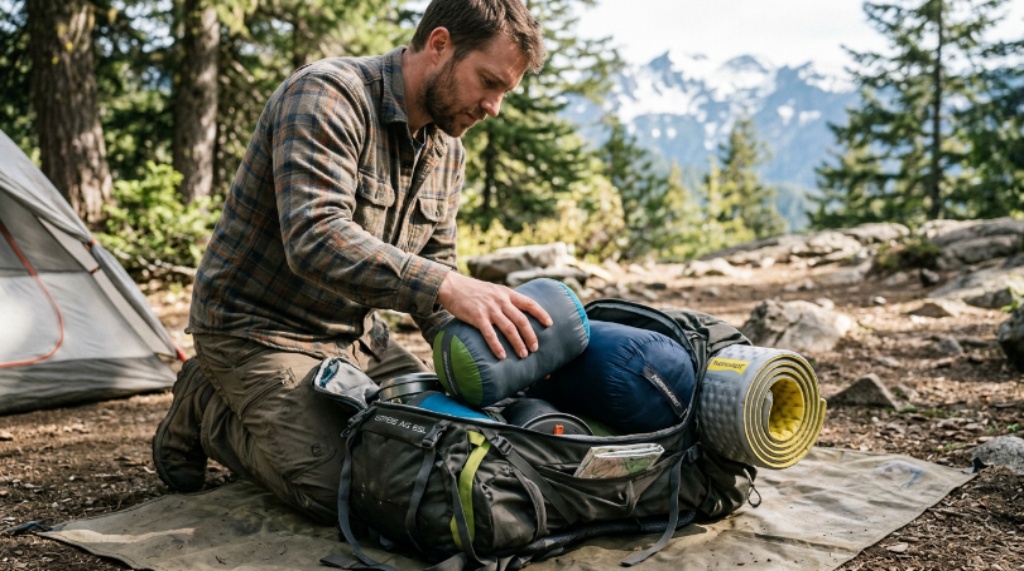
A pillow does not work in isolation. It is one part of a broader sleep system. Understanding how hiking sleep essentials interact helps you make smarter gear choices overall.
Your sleeping pad determines how much cushioning you have beneath you. A thick, comfortable pad reduces the demand on your pillow because your entire body is already well-supported. On the other hand, a thin pad means your pillow needs to work harder to keep your neck aligned.
Your sleeping bag affects your sleeping position too. A mummy bag restricts movement. If you tend to shift positions throughout the night, a mummy bag may keep you sleeping in one posture longer than usual. Therefore, a pillow that performs well in that fixed position becomes more important.
Tent design also plays a role. A low-profile tent may limit how much you can sit up or shift around, which can influence how you position your pillow. Consider your full sleep setup, not just individual pieces, when making gear decisions.
Practical Tips for Choosing the Right Pillow
These tips will help you make a confident decision before your next trip.
- Test the pillow at home before hitting the trail. Sleep on it for a few nights to know how your neck feels in the morning.
- If you already use a stuff sack as a makeshift pillow, weigh it the next time you pack. You may be surprised to find that a purpose-built option weighs the same or less and feels far better.
- Consider the trip length. A one-night overnighter can tolerate minor comfort compromises. A ten-day expedition cannot.
- Read reviews from people who share your sleep position. Side sleepers and back sleepers have different needs, and the best pillow for one group may disappoint the other.
- Buy from a brand with a return or trial policy. Comfort is subjective, and returning a pillow that does not work for you is far easier than living with a poor choice for an entire trip.
What to Avoid When Shopping
Some features sound appealing in product descriptions but underperform in real-world use.
Avoid pillows with complex valve systems that are difficult to operate with cold hands. On a chilly morning at altitude, a simple valve that opens and closes easily is worth more than a fancy design. Additionally, avoid pillows made entirely of slippery nylon on the sleeping surface. This material does not grip well and disrupts sleep every time your head moves.
Furthermore, be cautious of very cheap options with no reviews from real backpackers. A packable pillow that deflates overnight or develops a leak after two uses is not a bargain. It is a frustration. Spend a little more for reliability, especially on longer trips.
Conclusion
Choosing the right camping pillow for backpacking comes down to balancing three things: weight, packed size, and personal comfort. An ultralight camping pillow made with quality materials and a reliable inflation system can dramatically improve your trail sleep without adding meaningful weight to your pack. Consider your sleeping position, the length of your trip, and how your pillow fits into your overall sleep system.
Additionally, do not overlook the small details like surface texture and valve design. These features matter more than most product pages suggest. Test your pillow before a big trip, buy from a reputable brand, and remember that good sleep is not a luxury on the trail. It is a necessity. A well-rested hiker moves faster, thinks more clearly, and enjoys the experience far more.
Frequently Asked Questions
How light should a backpacking pillow be?
A backpacking pillow should ideally weigh between one and four ounces. Anything over four ounces should offer enough comfort or support to justify the added weight in your pack.
Is an inflatable or foam pillow better for backpacking?
It depends on your priorities. Inflatable pillows pack smaller and weigh less. Foam pillows feel more natural and require no inflation. Hybrid options offer a middle ground and suit most backpackers well.
Can I just use my jacket as a camping pillow?
You can, but it is not ideal. A bundled jacket rarely provides consistent neck support and can leave you with stiffness after a full night. A dedicated pillow weighs only a few ounces and delivers much better results.
What size should a backpacking pillow be?
Most backpacking pillows measure between twelve and sixteen inches wide when inflated. This is slightly smaller than a standard home pillow but sufficient for trail use, especially for side and back sleepers.
How do I keep my camping pillow from sliding during the night?
Choose a pillow with a soft, textured fabric on the sleeping surface rather than a smooth nylon exterior. Some pillows also include a loop or attachment point so you can connect them to your sleeping bag collar to keep them in place.