
Imagine holding a tool that turns simple wood pieces into custom shelves, decorative signs, or puzzle-like shapes. A jigsaw does exactly that. This versatile power tool cuts curves, circles, and straight lines in wood, plastic, and even thin metal. Beginners love it because it feels approachable yet powerful.
In fact, many DIY enthusiasts pick a jigsaw right after a drill as one of their first starter power tools. Recent data shows the DIY home improvement market reached over $42 billion in 2024, and it continues to grow as more people tackle projects at home. However, proper technique matters. Power saw injuries send thousands to emergency rooms each year, according to studies from the Consumer Product Safety Commission. If you choose an entry level jigsaw, you gain an easy jigsaw that helps you learn safely and build confidence fast.
What Is a Jigsaw and Why Choose It?
A jigsaw features a thin blade that moves up and down quickly. You guide it freehand to follow any line you draw. Unlike circular saws that excel only at straight cuts, a jigsaw handles tight curves and intricate patterns with ease.
Beginners benefit greatly from this flexibility. You start small projects without needing multiple tools. Additionally, modern jigsaws feel lightweight and balanced. Cordless models add freedom of movement around your workspace. For anyone building a collection of starter power tools, an easy jigsaw quickly becomes a favorite.
Moreover, it works on various materials. Wood remains the most common, but you can cut laminate, plywood, PVC, and light metal sheets. This range lets you experiment early and see real results.
Key Parts of a Jigsaw You Need to Know
Every jigsaw shares basic components. Familiarize yourself with them before you plug in.
The base plate, or shoe, rests on your material. It stays flat for stable cuts. Many models let you tilt it for angled bevel cuts.
The blade clamp holds the blade securely. Tool-free clamps make changes quick and simple.
Triggers and speed dials control power. Variable speed helps you match the tool to the material. Orbital settings add side-to-side motion for faster cuts in soft wood.
Handles come in top-handle or barrel-grip styles. Top-handle designs suit most beginners because they feel natural.
Finally, dust blowers and LED lights improve visibility. These small features make a big difference on your first tries.
Safety First: Protect Yourself Every Time
Safety never takes a back seat. Power tools demand respect, and a jigsaw is no exception.
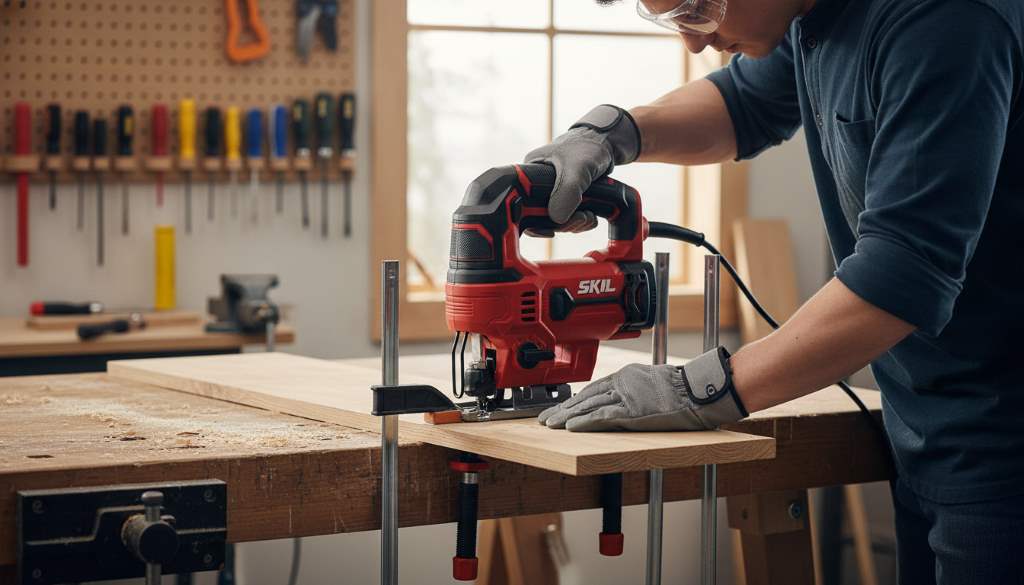
Always wear safety glasses. Wood chips fly fast. Ear protection helps during long sessions, and a dust mask keeps lungs clear.
Secure your workpiece firmly. Clamps prevent movement that leads to mistakes or injuries. Never hold material by hand while cutting.
Check the cord on corded models. Frayed wires create hazards. For cordless versions, ensure the battery locks properly.
Keep hands away from the blade path. Let the tool do the work instead of forcing it. If the blade binds, stop immediately and back out slowly.
Work in a well-lit, ventilated area. Good lighting helps you follow lines accurately and avoid accidents.
Choosing the Right Jigsaw for Beginners
New users need simple, reliable tools. Look for models with variable speed and easy blade changes.
Cordless options offer convenience. They eliminate cords that snag during cuts. Battery platforms let you share power with other tools.
Power matters too. Models between 5 and 7 amps handle most beginner tasks well. Higher amps help with thicker materials later.
Comfort counts. Hold the tool in the store if possible. A balanced weight reduces fatigue.
Easy jigsaws often include extras like blade storage and laser guides. These features help you cut straighter from day one.
Understanding Jigsaw Blades
Blades determine cut quality. Choose wrong, and you struggle. Choose right, and everything flows smoothly.
Teeth per inch (TPI) guide selection. High TPI (10-32) creates smooth cuts in thin materials. Lower TPI (6-10) cuts faster through thick wood.
Blade material varies. High-carbon steel works for wood. Bi-metal blades last longer and cut metal.
Shank type matters most. Most modern jigsaws accept T-shank blades. They lock securely without tools.
Always match blade to material. Wood blades have larger teeth. Metal blades feature finer teeth and stronger construction.
Keep several types on hand. Start with a general-purpose pack that includes wood and metal options.
Setting Up Your Workspace Properly
A good setup prevents frustration. Clear space first. Remove clutter that could catch the cord.
Secure a sturdy workbench. Add clamps or vices to hold materials steady.
Mark lines clearly. Use sharp pencils or scoring knives for accuracy. Masking tape reduces splintering on plywood.
Lay down drop cloths. Sawdust spreads quickly. Good ventilation carries it away.
Position lighting overhead and from the side. Shadows hide your cut line.
Finally, gather everything you need. Blades, pencils, clamps, and safety gear should sit within reach.
Related:
How to install window trim over drywall?
Step-by-Step: Making Your First Straight Cut
Ready to cut? Follow these steps carefully.
First, install the correct blade. Push it into the clamp until it clicks. Tug gently to confirm it holds.
Second, adjust speed. Start medium for wood. Lower speeds work better for metal or plastic.
Third, secure your material. Place it good-side down to minimize visible splintering.
Fourth, align the blade just outside your line. Rest the front of the base plate on the material.
Fifth, start the tool before touching the wood. Let it reach full speed.
Sixth, guide steadily. Apply light forward pressure. Let the blade cut at its own pace.
Finally, support the waste piece as you near the end. This prevents tear-out.
Practice on scrap first. Confidence grows quickly with each successful cut.
Mastering Curved and Circle Cuts
Curves set jigsaws apart. They shine where other saws fail.
Draw your pattern clearly. Use templates for perfect circles.
Start with relief cuts on tight curves. These short cuts toward the line give the blade room to turn.
Go slow on sharp turns. Speed causes blade drift.
For circles, drill a starter hole if cutting from inside. Narrow blades follow curves best.
Relief cuts also help. They prevent binding on intricate designs.
Practice scrolling patterns on scrap plywood. You improve feel rapidly.
Soon you create custom signs, toys, or decorative pieces easily.
How to Make Plunge Cuts Safely
Plunge cuts start inside material without entry holes.
Tilt the tool so only the front of the base touches. Start the motor.
Lower the spinning blade slowly into the wood. Keep firm control.
Once the blade penetrates fully, level the base and continue.
Practice this technique on scrap. It opens new project possibilities like internal cutouts.
Always wear eye protection. Wood chips fly upward during plunges.
Advanced Tips for Cleaner Cuts
Small adjustments yield big improvements.
Tape the cut line. Painter’s tape reduces splintering dramatically.
Cut good-side down when possible. Bottom surfaces hide minor tear-out.
Use a straightedge guide for long straight cuts. Clamp a board as a fence.
Adjust orbital action. Zero orbit gives cleanest cuts. Higher settings speed rough work.
Cool blades during long sessions. Heat dulls them quickly.
Change blades often. Sharp blades cut cleaner and safer.
Common Beginner Mistakes and How to Avoid Them
New users repeat similar errors. Learn them early.
Forcing the tool tops the list. Push too hard, and blades bend or break.
Wrong blades cause frustration. Dull or mismatched blades tear material.
Poor workpiece support leads to breakage. Always support both sides near the cut.
Starting cuts with the blade touching wood creates kickback. Let it spin freely first.
Ignoring speed settings burns plastic or melts edges. Match speed to material.
Skipping practice wastes material. Always test on scrap.
Maintenance Keeps Your Jigsaw Running Smoothly
Care extends tool life. Clean after each use.
Blow dust from vents. Wipe the base plate clean.
Check blade clamp regularly. Tighten if needed.
Lubricate moving parts lightly. Follow manufacturer guidelines.
Store in a dry case. Protect from moisture and impacts.
Inspect cords or batteries often. Replace damaged parts immediately.
Regular care ensures reliable performance project after project.
Troubleshooting Common Problems
Issues arise sometimes. Solve them quickly.
Blade wanders? Check for dullness or wrong type. Reduce speed on curves.
Excessive vibration signals loose parts. Tighten screws and clamps.
Burn marks mean too slow speed or dull blade. Increase speed or change blade.
Rough cuts come from high orbital settings. Reduce orbit for smoother results.
Motor strains indicate overload. Let the tool rest or use slower feed rate.
Most problems solve with simple adjustments or fresh blades.
Beginner-Friendly Project Ideas
Start simple. Build confidence gradually.
Create a basic wooden sign. Cut letters freehand or with stencils.
Make plant boxes. Straight cuts plus curves for decorative edges.
Build puzzle toys for kids. Intricate shapes teach control.
Craft wall hooks. Combine curves and straight lines.
Construct a birdhouse. Practice plunge cuts for entry holes.
Each project teaches new skills. Progress feels rewarding.
Conclusion
You now know how to start using a jigsaw safely and effectively. From understanding parts to mastering curves, these steps build a strong foundation. Practice regularly on scrap material. Your cuts improve quickly.
Grab your jigsaw today. Pick a small project and begin. The satisfaction of creating something with your hands awaits.
FAQs
What blade should beginners use first?
Start with a medium TPI (10-12) bi-metal blade. It handles general wood cutting well and lasts longer than basic steel.
Can beginners use a jigsaw safely?
Yes. Follow safety rules, wear protection, and practice on scrap. Proper technique makes it one of the safer power tools.
How do I cut straight lines with a jigsaw?
Clamp a straightedge as a guide. Keep the base plate against it while cutting steadily.
Is a cordless jigsaw good for beginners?
Absolutely. No cord means easier movement and fewer snags, which helps new users focus on technique.
How often should I change jigsaw blades?
Change when cuts become rough or slow. Dull blades work harder and produce poor results.
References
- Consumer Product Safety Commission reports on power tool injuries: https://www.cpsc.gov
- OSHA guidelines for safe power tool use: https://www.osha.gov
- Popular Mechanics on essential tools for DIY: https://www.popularmechanics.com
- Kreg Tool beginner jigsaw guide: https://learn.kregtool.com